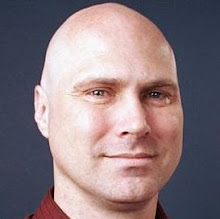
Hi everyone!
When I said I was going to take a break and focus on my professional blog, I didn't think it would mean I'd have *no* interaction with it. Yikes! that changes starting today (no this is not a new years resolution, but it's a good place to start up an old habit again :) ).
My professional blog is all about testing. This blog is all about everything else, and frankly, there's a lot of things that "everything else" entails. For starters, I decided last week to start up my Ego Over Matter posts again (note, I started on December 26th, not a New Years Resolution :) ). Still on Monday I will be putting in my first week of reality and how it has affected me.
I'm also focusing on Madd Money again, since there's a few aspects of personal finance I've missed writing about and want to cover more of in the days, weeks and months ahead.
Finally, I owe this newfound drive for my personal blog to Gerald Weinberg. His book "Weinberg on Writing, the Fieldstone Method" is opening my eyes to a way to write that I hope will be more effective and more insightful. We shall see :).
Showing posts with label life; goals. Show all posts
Showing posts with label life; goals. Show all posts
Saturday, January 1, 2011

Thursday, February 18, 2010
Gurus are Nice, But They Won’t Do Your Work!
It's been awhile since I've posted anything. That's going to change (LOL!).
It is common in our world of always on media, easy to attain reading, and 24/7 coverage of the most minute of things, to give ourselves over to “gurus”. While we pride ourselves on being free to think and believe what we want to, we seldom do. Religious or agnostic, politically active or apathetic, more times than not, our thoughts are not shaped by us, but often are shaped for us. We believe in someTHING, often because we believe in someONE.
Guru’s affect us for many reasons. We all have them, whether or not we want to use that exact word to describe them. In some ways, the term “guru” gives people strange feelings. When we think of a guru, we think of it in the terms of the culture that the term comes from. It comes from India, and is closely associated with Hindu spiritualism, and often conjures up the vision of a person who makes pronouncements, and people follow whatever they say, because the guru said it. Uncomfortable as that may be, if we look at many people and the way that they think and interact with others, this is *exactly* what the word means, and why I’m using it. I’ll admit it,
I have gurus I look to for certain things (or if you want, use the term mentor, coach, advisor, whatever makes you comfortable, but know that the term “guru” is still what I mean :) ). My favorite gurus are the ones that keep me entertained or well informed. If someone can do both without setting off my BS meter, there’s a good change I’ll listen to what they have to say. Below are a few of my current favorites that rise to the level of “guru” for me.
Thomas S. Monson: As a practicing Latter-day Saint, it should probably come as no surprise that the President of my church, a man whom I sustain as a prophet, seer and revelator, would perchance top my list of “gurus” that I consult. I also include within this list the men that preceded him, all the way back to Joseph Smith. Their advice is inspired, and oftentimes becomes the rock of doctrine and practice for the 12 million Latter-day Saints worldwide. Having said that, Thomas S. Monson is not in this position merely because he is the president of my church; he is here because I’ve had the benefit of listening to him for many years, applying his advice and suggestions, and feeling the surety that the vast majority of them have been to my benefit, most often spiritually, but quite a few times temporally. Does that mean I check my brain at the door and pledge to do what he says unquestioningly? No, it does not. However, over the many years I have listened to him, when I have taken him up on his advice to “experiment on the word” (not a phrase that originated with him) and give him the benefit of the doubt, I have more times than not felt the surety of his words and what they mean, and how their application has been a boon for me. Your mileage, of course, may vary, but so far, so good .
Dave Ramsey: When it comes to money, Dave’s my man. Long time readers of this blog should find absolutely no surprise in that. What are the reasons for this? First, I became hooked on his radio show after someone suggested I check it out. His style was engaging, and his humor and focus appealed to me. Ultimately, though, it was his message that meant something to me. He was as anti-debt as I was, and his advice and “Baby Steps” fit into my overall philosophy of how I wanted to manage my money. Because of this, I will confess to being a fan and one who listens to Dave Ramsey, but at the end of the day, listening to him does nothing if I don’t actually implement the suggestions he makes. In effect, I chose to “experiment on the word” again with Dave, and for the most part, his advice has been very good and very helpful. Do I agree 100% with *everything* he says? No, but I’ll give him about an 85% agreement rate. I think there is a proper use of credit, provided it is paid off in full every single month without fail, whereas he advocates fully eschewing debt, but that’s a minor nit. Overall, his message resonates with me, and I try my best to apply what I’ve learned from him.
Dan Carlin: It is safe to say that Dan has had the most profound effect on my political outlook of anyone in the past 20 years. Why is that? Well, it started with my listening to his Hardcore History podcast. As a fan of history, I love the segments that he creates, a “theatre of the mind” approach where the arcane bits of history come to life. It was through listening to these podcasts that I discovered that he had another podcast called “Common Sense”. Over the past few years, I have come to identify with his political philosophy of “neo-prudentism”, a philosophy where many of the great ideas do not belong to any one political party, and that we should not be so tied to ideas that any one political party presents, but should focus on what will work, and forsake that which does not. Why does this message resonate with me? It resonates because Dan is a master at understanding history, and how history rears its head in so many places. Because of this understanding, ideology gives way to pragmatism, and that pragmatism is really and truly the only valuable option. Don’t tell me the philosophy of the party; show me what will actually work. If it’s a good idea, I will support it on its own merits.
Larry Winget: Yeah, I have a thing for bald guys who wear loud shirts (LOL!), but that’s not the reason I love Larry so much. The real reason is that his approach to life and personal responsibility really appeals to me. He doesn’t sugar coat anything. He has a take no prisoners, kick butt approach to just about everything, and frankly, the dude is entertaining as all get out! Reading his books is a lot of fun, but even more fun is to actually listen to him. Few people could get away with telling people to “Shut Up, Stop Whining and Get a Life!”, but you look forward to hearing Larry say it :). More to the point, you look forward to putting into practice what he says.
Randy Rice: Up to this point, many of you probably knew who I was talking about because you’ve heard of them through the media or other places, but who is Randy Rice? Randy is a consultant that works out of Oklahoma City, and he is a teacher, a trainer, but most importantly, he is a tester. Yep, Randy shares my career and my avocation; he is fascinated with testing and the ways that testing is done. He’s someone who has invested a lot of time and effort into developing courseware, articles, and audio podcasts related to testing and the issues that surround it. Randy prides himself on the fact that he tries to take what can often be a rigorous and tedious job, and makes the ideas accessible. About half of my iRiver (my MP3 player of choice) is filled with Randy’s podcasts made over the past five years, and I look forward to opportunities to hear and learn from him. Still, Randy’s advice, ideas, and recorded podcasts mean little if I don’t take the ideas he presents and put them into practice.
So what’s my point with all of this? The voices we hear, the people that we look up to, the ones whose advice we seek, are there because of various reasons. The fact is, we all have them. The other fact is that, much of the time, our gurus do *nothing* for us except to maybe entertain us or get us to nod our heads in agreement (or occasional disagreement; I’d argue that a guru isn’t of much value if you agree with them 100% of the time). The true benefit of a guru is to consider their ideas, question them, look at them critically, and if they pass the criteria that critical thinking skills require, then it is our responsibility to actually “experiment on their words”. If we do that, regularly and consistently, then our gurus will actually be a benefit to us. Also, it gives us a chance to develop enough experience to the point that, like it or not, may make us the guru to others :).
It is common in our world of always on media, easy to attain reading, and 24/7 coverage of the most minute of things, to give ourselves over to “gurus”. While we pride ourselves on being free to think and believe what we want to, we seldom do. Religious or agnostic, politically active or apathetic, more times than not, our thoughts are not shaped by us, but often are shaped for us. We believe in someTHING, often because we believe in someONE.
Guru’s affect us for many reasons. We all have them, whether or not we want to use that exact word to describe them. In some ways, the term “guru” gives people strange feelings. When we think of a guru, we think of it in the terms of the culture that the term comes from. It comes from India, and is closely associated with Hindu spiritualism, and often conjures up the vision of a person who makes pronouncements, and people follow whatever they say, because the guru said it. Uncomfortable as that may be, if we look at many people and the way that they think and interact with others, this is *exactly* what the word means, and why I’m using it. I’ll admit it,
I have gurus I look to for certain things (or if you want, use the term mentor, coach, advisor, whatever makes you comfortable, but know that the term “guru” is still what I mean :) ). My favorite gurus are the ones that keep me entertained or well informed. If someone can do both without setting off my BS meter, there’s a good change I’ll listen to what they have to say. Below are a few of my current favorites that rise to the level of “guru” for me.
Thomas S. Monson: As a practicing Latter-day Saint, it should probably come as no surprise that the President of my church, a man whom I sustain as a prophet, seer and revelator, would perchance top my list of “gurus” that I consult. I also include within this list the men that preceded him, all the way back to Joseph Smith. Their advice is inspired, and oftentimes becomes the rock of doctrine and practice for the 12 million Latter-day Saints worldwide. Having said that, Thomas S. Monson is not in this position merely because he is the president of my church; he is here because I’ve had the benefit of listening to him for many years, applying his advice and suggestions, and feeling the surety that the vast majority of them have been to my benefit, most often spiritually, but quite a few times temporally. Does that mean I check my brain at the door and pledge to do what he says unquestioningly? No, it does not. However, over the many years I have listened to him, when I have taken him up on his advice to “experiment on the word” (not a phrase that originated with him) and give him the benefit of the doubt, I have more times than not felt the surety of his words and what they mean, and how their application has been a boon for me. Your mileage, of course, may vary, but so far, so good .
Dave Ramsey: When it comes to money, Dave’s my man. Long time readers of this blog should find absolutely no surprise in that. What are the reasons for this? First, I became hooked on his radio show after someone suggested I check it out. His style was engaging, and his humor and focus appealed to me. Ultimately, though, it was his message that meant something to me. He was as anti-debt as I was, and his advice and “Baby Steps” fit into my overall philosophy of how I wanted to manage my money. Because of this, I will confess to being a fan and one who listens to Dave Ramsey, but at the end of the day, listening to him does nothing if I don’t actually implement the suggestions he makes. In effect, I chose to “experiment on the word” again with Dave, and for the most part, his advice has been very good and very helpful. Do I agree 100% with *everything* he says? No, but I’ll give him about an 85% agreement rate. I think there is a proper use of credit, provided it is paid off in full every single month without fail, whereas he advocates fully eschewing debt, but that’s a minor nit. Overall, his message resonates with me, and I try my best to apply what I’ve learned from him.
Dan Carlin: It is safe to say that Dan has had the most profound effect on my political outlook of anyone in the past 20 years. Why is that? Well, it started with my listening to his Hardcore History podcast. As a fan of history, I love the segments that he creates, a “theatre of the mind” approach where the arcane bits of history come to life. It was through listening to these podcasts that I discovered that he had another podcast called “Common Sense”. Over the past few years, I have come to identify with his political philosophy of “neo-prudentism”, a philosophy where many of the great ideas do not belong to any one political party, and that we should not be so tied to ideas that any one political party presents, but should focus on what will work, and forsake that which does not. Why does this message resonate with me? It resonates because Dan is a master at understanding history, and how history rears its head in so many places. Because of this understanding, ideology gives way to pragmatism, and that pragmatism is really and truly the only valuable option. Don’t tell me the philosophy of the party; show me what will actually work. If it’s a good idea, I will support it on its own merits.
Larry Winget: Yeah, I have a thing for bald guys who wear loud shirts (LOL!), but that’s not the reason I love Larry so much. The real reason is that his approach to life and personal responsibility really appeals to me. He doesn’t sugar coat anything. He has a take no prisoners, kick butt approach to just about everything, and frankly, the dude is entertaining as all get out! Reading his books is a lot of fun, but even more fun is to actually listen to him. Few people could get away with telling people to “Shut Up, Stop Whining and Get a Life!”, but you look forward to hearing Larry say it :). More to the point, you look forward to putting into practice what he says.
Randy Rice: Up to this point, many of you probably knew who I was talking about because you’ve heard of them through the media or other places, but who is Randy Rice? Randy is a consultant that works out of Oklahoma City, and he is a teacher, a trainer, but most importantly, he is a tester. Yep, Randy shares my career and my avocation; he is fascinated with testing and the ways that testing is done. He’s someone who has invested a lot of time and effort into developing courseware, articles, and audio podcasts related to testing and the issues that surround it. Randy prides himself on the fact that he tries to take what can often be a rigorous and tedious job, and makes the ideas accessible. About half of my iRiver (my MP3 player of choice) is filled with Randy’s podcasts made over the past five years, and I look forward to opportunities to hear and learn from him. Still, Randy’s advice, ideas, and recorded podcasts mean little if I don’t take the ideas he presents and put them into practice.
So what’s my point with all of this? The voices we hear, the people that we look up to, the ones whose advice we seek, are there because of various reasons. The fact is, we all have them. The other fact is that, much of the time, our gurus do *nothing* for us except to maybe entertain us or get us to nod our heads in agreement (or occasional disagreement; I’d argue that a guru isn’t of much value if you agree with them 100% of the time). The true benefit of a guru is to consider their ideas, question them, look at them critically, and if they pass the criteria that critical thinking skills require, then it is our responsibility to actually “experiment on their words”. If we do that, regularly and consistently, then our gurus will actually be a benefit to us. Also, it gives us a chance to develop enough experience to the point that, like it or not, may make us the guru to others :).
Tuesday, June 23, 2009
Madd Money: Are We Really Living in “The New Normal”?
As we are watching people react to “The Great Recession”, there is a definite change in some people’s attitudes and approaches to things. I can truthfully say that I am one of them. Some time ago, I made a rather flip statement that I was not going to participate in this recession, and a few people asked me later what I meant by that? For the record, when I said I was not going to participate in this recession I meant attitudinally I was not going to give in to negativity and downer thinking, nor was I going to look to others to provide me a windfall or relief. It also meant that I was going to do what I had to so that I could thrive in a climate of negativity and pessimism, wherever possible. I’m not a really big or motivated spectator of “the Economy”, but I am a very motivated active participant in *MY* Economy, i.e. the one that effects my family and me every day.
A phrase that is being used a lot right now is “The New Normal”, and it’s often spoken about with pessimism. However, there are many that are taking the opportunity to say that “The New Normal” need not be a doom and gloom scenario. There is even a blog and site called The New Normal, written by Roger McNamee (and he has a book with the same title :) ), and I’ve had a good time reading the entries and thinking about the ideas in it. Note: The New Normal in this case is of a technology and development aim; makes sense because I work with software and technology, this would be the avenue I’d think of first for these things. Also, many of the areas he talked about were from four years ago; his last entry was written May 13, 2005. Still, the ideas he presented, and their impacts on our lives, deserve to be explored and considered.
According to McNamee, the hallmarks of “The New Normal” are:
1. Technology is changing just about everything.
2. Globalization is changing the nature of economic opportunity.
3. Every individual is on his or her own. We have more power than ever before, but no safety nets.
4. None of us has enough time to deal with life.
I think that these sentiments are accurate for many of us, and that they do reflect the reality of our day to day lives. There are many that are scared of this “New Normal”. We live in an age where governments, companies and institutions are losing steam at an amazing rate. The days of one or two countries calling the shots with regards to the economy are fading quickly. Globalization is real, it’s here, and it’s a permanent part of our landscape. Automation of work and processes, and the commoditization of that work and those processes, is reality. If I cannot distinguish myself from another person who can do the same job as I do, whether they be in San Francisco or Sierra Leone, I better not be surprised if my work or my job goes elsewhere.
The key is planning, and that planning will take time. We grew conditioned to the idea that success comes quickly in the 90’s and this past decade. It’s rarely the case, but that’s what we have been led to believe. For most of us, we need time and a plan to develop our skills. Information and accessibility do not translate to mastery (it’s taken me awhile to wrap my head around this one, but I think I’m finally getting it). We can read everything, follow everything, learn and see the latest and greatest trends, but the fact is that there is no replacement for the necessary wood shedding required to actually get good at something. If you want to become an excellent musician, you have to practice. If you want to become an excellent engineer, again, you must practice. If you want to become an excellent money manager (personal or otherwise), you have to practice living in a way that is long term sustainable And allows you hte ability to account accurately for where your money goes.
With the realities of “The New Normal” what can we as individuals do? I like McNamee’s list, and I like his approaches to them, with some tweaks of my own:
First, move on from the 90s. The conditions that made it such an explosive and profitable decade have matured and become part of our lives. It will take another paradigm shift to make something like it again. Feel free to work to see if you can make another one, but don’t passively wait for one to come along, you may be waiting a very long time.
Second, work at a company you believe in. Put your efforts into things that matter and with people that matter to you. Making money but being miserable is rarely a long term method of success, and the resulting things that end up cluttering your life may very well prove to not be worth it in the end.
Third, establish a balance between your professional and personal lives that you can sustain for five or ten years. I remember when I was younger I thought I’d love to be a clinical psychologist, since I love talking with people and analyzing things. I gave up that pursuit because the idea of a bachelors degree, then a Masters Degree, then various internships and externships, and the notion that I wouldn’t really be doing any work until I was 30 turned me off to the whole thing. What happened was that I fell victim to the idea of “get results quickly” instead of following through with my plan, which would have taken much more time. Today, I have come to see that large scale changes take time to bring to fruition, and they require patience and a lot of very small goals that can be chained together to large scale objectives. Theory is great, but you have to make time to put some doing in so that you can get good at the thing you ultimately want to do.
Fourth, remember the three Ps: priorities, planning, and participation. We can’t do it all, at least not all simultaneously and hope to be stellar in all areas. There just isn’t enough time. There is no shortage of important things that we all can and should be doing with out time and our resources, but we have to come to our own conclusions about what is most important to us. Many have asked me how I became successful at Scouting, and the answer is, I don’t really know if I am successful, but it doesn’t really matter; I do it because I love it! When you love something and you are willing to put your all into it, opportunities abound. It’s not because I had opportunities handed to me, but it was because I enjoyed doing scouting so much that I was willing to jump into new avenues and try new things, even if they scared the living daylights out of other people (LOL!). For me, my ability to give back to my community and the net generation is ultimately what drives me. I get my sense of joy out of watching kids learn, seeing them smile when they prove that they have mastered certain skills, and then can grow up to be productive, moral and ethical stewards of their worlds. In a nutshell, that is what I am passionate about, and that’s where I choose to put my emphasis. At the same time, I enjoy doing what I do for a living, and realize that, if I want to reach higher in that area, I need to apply the same level of focus and attitude as I do to those areas, too.
So for those out there who are hearing this “New Normal” for the first time, or you have anxiety about it, I encourage embracing it, and growing with it, and doing all you can to align with it rather than fight against it or wait for a return to “the good old days”... because there’s really no such thing as “The Good Old Days” coming back, just a never ending and moderately changing sequence of “New Normals” that we will all face as time goes on. I’m looking forward to embracing and working with those times when they get here, for better or worse. How about you :)?
A phrase that is being used a lot right now is “The New Normal”, and it’s often spoken about with pessimism. However, there are many that are taking the opportunity to say that “The New Normal” need not be a doom and gloom scenario. There is even a blog and site called The New Normal, written by Roger McNamee (and he has a book with the same title :) ), and I’ve had a good time reading the entries and thinking about the ideas in it. Note: The New Normal in this case is of a technology and development aim; makes sense because I work with software and technology, this would be the avenue I’d think of first for these things. Also, many of the areas he talked about were from four years ago; his last entry was written May 13, 2005. Still, the ideas he presented, and their impacts on our lives, deserve to be explored and considered.
According to McNamee, the hallmarks of “The New Normal” are:
1. Technology is changing just about everything.
2. Globalization is changing the nature of economic opportunity.
3. Every individual is on his or her own. We have more power than ever before, but no safety nets.
4. None of us has enough time to deal with life.
I think that these sentiments are accurate for many of us, and that they do reflect the reality of our day to day lives. There are many that are scared of this “New Normal”. We live in an age where governments, companies and institutions are losing steam at an amazing rate. The days of one or two countries calling the shots with regards to the economy are fading quickly. Globalization is real, it’s here, and it’s a permanent part of our landscape. Automation of work and processes, and the commoditization of that work and those processes, is reality. If I cannot distinguish myself from another person who can do the same job as I do, whether they be in San Francisco or Sierra Leone, I better not be surprised if my work or my job goes elsewhere.
The key is planning, and that planning will take time. We grew conditioned to the idea that success comes quickly in the 90’s and this past decade. It’s rarely the case, but that’s what we have been led to believe. For most of us, we need time and a plan to develop our skills. Information and accessibility do not translate to mastery (it’s taken me awhile to wrap my head around this one, but I think I’m finally getting it). We can read everything, follow everything, learn and see the latest and greatest trends, but the fact is that there is no replacement for the necessary wood shedding required to actually get good at something. If you want to become an excellent musician, you have to practice. If you want to become an excellent engineer, again, you must practice. If you want to become an excellent money manager (personal or otherwise), you have to practice living in a way that is long term sustainable And allows you hte ability to account accurately for where your money goes.
With the realities of “The New Normal” what can we as individuals do? I like McNamee’s list, and I like his approaches to them, with some tweaks of my own:
First, move on from the 90s. The conditions that made it such an explosive and profitable decade have matured and become part of our lives. It will take another paradigm shift to make something like it again. Feel free to work to see if you can make another one, but don’t passively wait for one to come along, you may be waiting a very long time.
Second, work at a company you believe in. Put your efforts into things that matter and with people that matter to you. Making money but being miserable is rarely a long term method of success, and the resulting things that end up cluttering your life may very well prove to not be worth it in the end.
Third, establish a balance between your professional and personal lives that you can sustain for five or ten years. I remember when I was younger I thought I’d love to be a clinical psychologist, since I love talking with people and analyzing things. I gave up that pursuit because the idea of a bachelors degree, then a Masters Degree, then various internships and externships, and the notion that I wouldn’t really be doing any work until I was 30 turned me off to the whole thing. What happened was that I fell victim to the idea of “get results quickly” instead of following through with my plan, which would have taken much more time. Today, I have come to see that large scale changes take time to bring to fruition, and they require patience and a lot of very small goals that can be chained together to large scale objectives. Theory is great, but you have to make time to put some doing in so that you can get good at the thing you ultimately want to do.
Fourth, remember the three Ps: priorities, planning, and participation. We can’t do it all, at least not all simultaneously and hope to be stellar in all areas. There just isn’t enough time. There is no shortage of important things that we all can and should be doing with out time and our resources, but we have to come to our own conclusions about what is most important to us. Many have asked me how I became successful at Scouting, and the answer is, I don’t really know if I am successful, but it doesn’t really matter; I do it because I love it! When you love something and you are willing to put your all into it, opportunities abound. It’s not because I had opportunities handed to me, but it was because I enjoyed doing scouting so much that I was willing to jump into new avenues and try new things, even if they scared the living daylights out of other people (LOL!). For me, my ability to give back to my community and the net generation is ultimately what drives me. I get my sense of joy out of watching kids learn, seeing them smile when they prove that they have mastered certain skills, and then can grow up to be productive, moral and ethical stewards of their worlds. In a nutshell, that is what I am passionate about, and that’s where I choose to put my emphasis. At the same time, I enjoy doing what I do for a living, and realize that, if I want to reach higher in that area, I need to apply the same level of focus and attitude as I do to those areas, too.
So for those out there who are hearing this “New Normal” for the first time, or you have anxiety about it, I encourage embracing it, and growing with it, and doing all you can to align with it rather than fight against it or wait for a return to “the good old days”... because there’s really no such thing as “The Good Old Days” coming back, just a never ending and moderately changing sequence of “New Normals” that we will all face as time goes on. I’m looking forward to embracing and working with those times when they get here, for better or worse. How about you :)?
Subscribe to:
Posts (Atom)