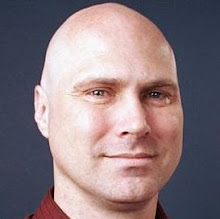
After much consideration, thinking and the need to make something that is a big part of my life more specific, I've made the decision to start a new project. While I will still update MKL's Muse on as close to a daily basis as I can, one set of posts are going to go away, or more accurately, one set of posts will be getting a more specific grouping and a blog of their own.
I have created a new blog called "Scoutmaster Mike", and this will contain many of my musings commentary and other aspects about being a Scout leader and all that goes with it. This will be the first of my blogs that will be topic specific. In other words, my various musings about Scouting that are specifically scouting related (trips, activities, thoughts about Scouting), will now appear there, so those who are Scouting Geeks, I encourage you to jump on and follow along. That's not to say that I will not put the occasional Scouting post here, too, but I will tend to save those for the moments and thoughts that are more personal and reflective of me and for me (and of course, for those voyeuristic types that like to follow along with my musings (LOL!).
Today's Post is the Scoutmaster Minute that i shared last night, and I will from time to time make a mention of posts that I make there in my entries here. My thanks to those who have encouraged me to consider spinning this section off. There's no questions it's the one area of my life that I am actually something of an authority on and can speak at length about (well, outside of the dumb and silly things I do in my day to day life, I have the equivalent of a PhD in THAT :) ).
Showing posts with label Scoutmaster Mike. Show all posts
Showing posts with label Scoutmaster Mike. Show all posts
Wednesday, July 15, 2009

Monday, June 29, 2009
Scoutmater Mike: Aftermath of the “Silent Campout”

On Friday afternoon, seven boys and four adults gathered together for an interesting experiment. Though we as Scout leaders often talk about being just advisors and that it’s the boys that lead the program, in reality a lot of the program is led and directed by adults. Likewise, while boys want to believe that they are ultimately in charge, there are a lot of things that Scout Leaders do in the background that they are often not aware of. What happens when the adult leaders make good on a pledge to completely butt out of the leadership decisions and leave the whole experience, entirely, up to the boys?
The answer is... what happened this weekend (LOL!).
So here’s a recap… we arrived at Huddart Park right around 6:00 PM. The adults set up their camp area in the first camp site, the boys set up their camp just down the hill in the next camp area. Close enough so that we could observe and take notes, and intervene if safety required it, but far enough away that we wouldn’t be able to hear general conversations or interfere with any of their plans. While the adults had their camping area up and together in about 20 minutes, the boys… well let’s just say it took them quite a bit longer. We brought five tents for the boys to use… but they opted to go with two. One large one, one small 2-3 man one. The adults got together and quickly put together their dinner; Paul had premade the enchilada pie recipe that we had, so we just started the coals and waited for them to get ready. While we waited, we also put together a recipe called “Monkey Bread” which we had never tried before. By the time the coals were ready, we had both dishes on and cooking. Looking down at the younger guys camp sites… two guys were actively engaged in trying to cook, with little to no help from anyone else. After the adults had finished dinner, we all quickly got together and cleaned up our plates and washed out or pots… the boys were still trying to cook as the sun was going down.
While I said that we would not interfere, I did pop down a couple of times just to see how everything was going. Nick had planned on a dish called Coca-Cola Chicken, and it turned out terrific, but it took a long time to cook with what they had. As I promised not to interfere with their plans or their preparations, I withheld comments, but I could clearly see that they needed to have a better understanding of how to effectively cook with charcoal, something that only comes with experience. By the time they were ready to cook their cobbler, the coals had died down and they were having a difficult time getting enough heat to cook it. I suggested that they scoop out the cobbler and put it in a container and try again the next day, a decision my son decided was a good one :).
As the adults decided to turn in, we noticed that there was a fair amount of noise in the lower camping area. True to our word, we decided to let them keep their own time… if the SPL didn’t quiet them down, then they would be allowed to do whatever they chose to do… as long as it didn’t wake us up. Around 3:00 AM, when there was still some nattering going on, it was enough to wake up Chris, who then yelled out a “Boys, go to sleep!”… and all was quiet in Huddart Park after that (LOL!).
Morning came, and the adults awoke with the rising sun around 7:00 AM. We proceeded to get right to breakfast (a great concoction I discovered called Dutch Oven Train Wreck… looks awful, tastes fabulous (LOL!). Looking down, I could see that the boys were grousing as to what they should eat, and realizing that they did not grease the griddle they were cooking their eggs on… net results, some chunky eggs for some, and some boys that opted just not to eat. A review of the camp area was quite telling; there were pieces of equipment strewn everywhere, and it turns out that, since the boys only set up two tents, it was somewhat amusing to see that one small tent was housing five boys, while a big tent had two boys in it (not sure who decided that, but hey, there it is).
After we finished cleaning up everything and packed our stuff into the car, we announced that we would be leading the boys on a five mile hike from the entrance area to the Toyon campgrounds. Some boys were equipped with hiking books, their scout shorts and an activity T-shirt. Other boys opted to wear what they felt was “cool” and “fashionable” (read: tight skinny legged jeans and converse sneakers). I will admit I carried probably the hint of a wry smile as we all made our way to the Toyon campgrounds and back… there were some grumblings from some boys that their jeans were uncomfortable, and that their feet were starting to hurt (hey, ‘Be Prepared” is more than just a motto, it’s a way of life for scouts). By the time we came back to prepare for lunch, again, the boys had their fixings and we adults had ours. The boys found out, sadly, what happens when food is not put away properly. They had two loaves of bread to start, but one of them disappeared during the night (likely cause being a raccoon that decided white bread would be a nice night-time treat).
As we drove the boys home and we saw them alternate between smiles and grumblings, we think some valuable lessons were learned this weekend. First, many of the miscommunications could have been handled if the boys had put together a duty roster and explained who was responsible for what (something the adults did each campout, but which they decided they didn’t need… until it was too late (LOL! ). Also, they noticed that the adults took some time and prepared many of the food items in advance, which saved time. They also saw that teamwork was what got the adults to get everything done efficiently and cleanly, and that we were rarely at a loss for time or in need to scramble for anything. The boys also realized that the scout uniform is designed to do things in, more so than their everyday wear (Nick was walking a little “wide legged” yesterday.. , that ought to be all you need to know to explain his state of being). It sounds like I’m poking fun, and I‘m really not… but I will admit to smiling a little bit at these revelations the boys are having now. For the last two years, I have been trying to get them to follow this model, and encouraging them to do what they need to do to make it happen. This has been seen as meddling, and adults taking on too much of a leadership role with the Troop. After this weekend, I hope the boys now have a much clearer picture as to what truly leading a campout entails and I will be very interested in seeing how the next campout goes. Whether or not the next one is truly a “silent” campout again is anyone’s guess, but I really do look forward to the day when we have one of these silent campouts and all of the objectives get met at a high level. Then I’ll know I’m really doing my job right :).
Wednesday, June 17, 2009
Scoutmaster Mike: Planning for the "Silent Camp Out"
Our Troop is currently in the process of planning a unique little adventure. It’s called a “Silent Camp Out” and it is basically my son Nick’s idea.
A few weeks ago, we were driving up to Point Reyes and back, and Nick was looking through one of my books (Footsteps of the Founder, a book that is filled with quotes and comments from Lord Baden-Powell, the founder of Scouting in the United Kingdom. One of the quotes that Nick commented on was Baden-Powell’s idea of holding a silent camp out, and how we should do something like it.
The idea of the silent camp out is that the Troop goes somewhere that is not too difficult to get to or set up in, and there are two camp areas set, both in sight of each other and close proximity. One camping area is for the adult leaders, and the other camping area is for the scouts. Both camps must be wholly self sufficient; cooking utensils, food, tents, sleeping bags, fire rings, etc, all need to be maintained in their separate areas. What’s more, the adult leaders are officially not allowed to talk to or make comments about what the boys in the Patrol are doing. They can intervene when safety is at issue, or it is absolutely necessary to do so, but otherwise they are to take a “bee seen and not heard” role.
The purpose for this type of outing is to show the boys what their teamwork and skill level really is if they were totally left to their own devices; no adult help would be forthcoming unless it was absolutely necessary. If the kids didn’t pack something and it wasn’t dangerous, they would do with out it. That went for food, sleeping bags, tents, clothes, what have you. The adults are free to hang with themselves and talk amongst themselves, but they are not free to comment directly to the boys. If there is any feedback about the event, it is to be handled after the camp out and then only at the next Troop meeting.
My hope with this is that we will have the ability to see the boys step up and really lead each other. More so, it’s my hope that I will have the will power to actually keep my mouth shut for the entire campout (at least as pertains to the boys and what they are doing :) ). This could be an awesome experience, or it could be a nightmare. It just might be both (LOL!). Anyway, we are going to be embarking on this grand experiment on June 26, 2009. I’ll definitely let y’all know how it turns out ;).
A few weeks ago, we were driving up to Point Reyes and back, and Nick was looking through one of my books (Footsteps of the Founder, a book that is filled with quotes and comments from Lord Baden-Powell, the founder of Scouting in the United Kingdom. One of the quotes that Nick commented on was Baden-Powell’s idea of holding a silent camp out, and how we should do something like it.
The idea of the silent camp out is that the Troop goes somewhere that is not too difficult to get to or set up in, and there are two camp areas set, both in sight of each other and close proximity. One camping area is for the adult leaders, and the other camping area is for the scouts. Both camps must be wholly self sufficient; cooking utensils, food, tents, sleeping bags, fire rings, etc, all need to be maintained in their separate areas. What’s more, the adult leaders are officially not allowed to talk to or make comments about what the boys in the Patrol are doing. They can intervene when safety is at issue, or it is absolutely necessary to do so, but otherwise they are to take a “bee seen and not heard” role.
The purpose for this type of outing is to show the boys what their teamwork and skill level really is if they were totally left to their own devices; no adult help would be forthcoming unless it was absolutely necessary. If the kids didn’t pack something and it wasn’t dangerous, they would do with out it. That went for food, sleeping bags, tents, clothes, what have you. The adults are free to hang with themselves and talk amongst themselves, but they are not free to comment directly to the boys. If there is any feedback about the event, it is to be handled after the camp out and then only at the next Troop meeting.
My hope with this is that we will have the ability to see the boys step up and really lead each other. More so, it’s my hope that I will have the will power to actually keep my mouth shut for the entire campout (at least as pertains to the boys and what they are doing :) ). This could be an awesome experience, or it could be a nightmare. It just might be both (LOL!). Anyway, we are going to be embarking on this grand experiment on June 26, 2009. I’ll definitely let y’all know how it turns out ;).
Friday, January 30, 2009
Scoutmaster Mike: Going Back To Gilwell, Weekend 1
Last weekend, I had the chance to spend time with my fellow Wood Badge Staffer compatriots in our first “On The Hill” Course Development Weekend. Since I’m a first year troop guide, this is my first experience at this particular rodeo. Granted, I was a participant back in 2007, and I had a great time doing it. After I completed my projects and received my beads, I was surprised somewhat to get an email shortly thereafter to ask if I would be willing to serve as a member of the staff for the Spring 2009 “LDS Friendly” Wood Badge Course. After checking the schedule and bartering with Christina to see if it was doable, I finally said “Yes, I’m game, I’ll do it”.
To give you a little idea what a Course Development Weekend is all about, it’s where the staff comes together (for an entire weekend) once a month, usually six months in advance, and starts modeling out and practicing the presentations and blocking of the course. The syllabus for “Wood Badge for the 21st Century” is *HUGE*, and it’s a training event that goes from sun up until sundown (and later) for six days. In our area, these courses actually break up to be two full days and one half day over two weekends, with a break in between. That means that, to make sure everyone knows what they need to do and to schedule and plan everything correctly, these Course Development weekends are *critical*!
I arrived up at Boulder Creek after a moderate rain and the sections of Skyline and Hwy 9 that I drive to get there being encased in fog and cloud cover. To say I white knuckled it to get there would be an understatement. Still, all that washed away pretty quickly as I got in to the kitchen at Boulder Creek Scout Reservation and was greeted by my compatriots and we all sat down to a well cooked meal by our own “4 Bead Café” staff. Not only are the people who run the 4 Bead Café great cooks, but they all are former Course Directors for Wood Badge (not sure how many other areas that put on these trainings can say that ). After we had dinner, we all took our gear and put it into our tents we’d be staying in for the weekend, and from there, we got down to business.
The most important thing for a first Year Troop Guide to do is get comfortable with making presentations, because as a Troop Guide, you will be making a *lot* of them! We had a bunch of the staff sit in on our presentations, and then we listened to feedback related to our presentation style, our content, our overall approach and the tools that we used. To say that this could be unnerving is quite the understatement (LOL!). Imagine standing in front of a bunch of people who have been doing this stuff for years, and you are the greenhorn giving his first practice presentation to a group of longtime vets! Add to the fact that my presentations were still on my computer, and had not been made into flip-books yet (as is Wood Badge custom) and I pretty much felt like I was standing in the middle of a six lane highway with my pants around my ankles. Fortunately, these old pros were there to help guide me, not rip me apart, and they also made it clear that they had all been in this exact same spot at one point, and knew what it felt like. After a round of presentation practice and some talk about other logistics, we all turned in late.
A hallmark of schedules for Course Development weekends is the fact that there is a lot to do and almost no time to do it all, so there’s very little down time. You’re marking or practicing or critiquing or being critiqued just about all the time, with breaks for meals and hitting the bathroom the only diversion. It’s a lot of work, but amazingly, it’s never dull. In many ways, but the time Sunday afternoon rolled around, I was amazed at how quickly it all went. We then said our goodbyes and drove home, and I think it’s safe to say that I’m not the only one who thought to themselves “wow, that was a lot of work… I’m pretty tired… I can’t wait to get together and do it all again!”
See, I’m convinced that I’m weird and crazy, because I actually like this whole Staffer thing. What’s also great is that I feel like I’m really getting to know these other staffers, and I wouldn’t hesitate to call many of them second family. I’m sure that for the veterans, they have those feelings on an exponential level. So I’ll be biding my time, practicing my presentations, changing things up here and there, and thinking about what I need to do so that I can make the most of my time “On the Hill” when I “Go Back to Gilwell” :).
To give you a little idea what a Course Development Weekend is all about, it’s where the staff comes together (for an entire weekend) once a month, usually six months in advance, and starts modeling out and practicing the presentations and blocking of the course. The syllabus for “Wood Badge for the 21st Century” is *HUGE*, and it’s a training event that goes from sun up until sundown (and later) for six days. In our area, these courses actually break up to be two full days and one half day over two weekends, with a break in between. That means that, to make sure everyone knows what they need to do and to schedule and plan everything correctly, these Course Development weekends are *critical*!
I arrived up at Boulder Creek after a moderate rain and the sections of Skyline and Hwy 9 that I drive to get there being encased in fog and cloud cover. To say I white knuckled it to get there would be an understatement. Still, all that washed away pretty quickly as I got in to the kitchen at Boulder Creek Scout Reservation and was greeted by my compatriots and we all sat down to a well cooked meal by our own “4 Bead Café” staff. Not only are the people who run the 4 Bead Café great cooks, but they all are former Course Directors for Wood Badge (not sure how many other areas that put on these trainings can say that ). After we had dinner, we all took our gear and put it into our tents we’d be staying in for the weekend, and from there, we got down to business.
The most important thing for a first Year Troop Guide to do is get comfortable with making presentations, because as a Troop Guide, you will be making a *lot* of them! We had a bunch of the staff sit in on our presentations, and then we listened to feedback related to our presentation style, our content, our overall approach and the tools that we used. To say that this could be unnerving is quite the understatement (LOL!). Imagine standing in front of a bunch of people who have been doing this stuff for years, and you are the greenhorn giving his first practice presentation to a group of longtime vets! Add to the fact that my presentations were still on my computer, and had not been made into flip-books yet (as is Wood Badge custom) and I pretty much felt like I was standing in the middle of a six lane highway with my pants around my ankles. Fortunately, these old pros were there to help guide me, not rip me apart, and they also made it clear that they had all been in this exact same spot at one point, and knew what it felt like. After a round of presentation practice and some talk about other logistics, we all turned in late.
A hallmark of schedules for Course Development weekends is the fact that there is a lot to do and almost no time to do it all, so there’s very little down time. You’re marking or practicing or critiquing or being critiqued just about all the time, with breaks for meals and hitting the bathroom the only diversion. It’s a lot of work, but amazingly, it’s never dull. In many ways, but the time Sunday afternoon rolled around, I was amazed at how quickly it all went. We then said our goodbyes and drove home, and I think it’s safe to say that I’m not the only one who thought to themselves “wow, that was a lot of work… I’m pretty tired… I can’t wait to get together and do it all again!”
See, I’m convinced that I’m weird and crazy, because I actually like this whole Staffer thing. What’s also great is that I feel like I’m really getting to know these other staffers, and I wouldn’t hesitate to call many of them second family. I’m sure that for the veterans, they have those feelings on an exponential level. So I’ll be biding my time, practicing my presentations, changing things up here and there, and thinking about what I need to do so that I can make the most of my time “On the Hill” when I “Go Back to Gilwell” :).
Wednesday, January 28, 2009
Scoutmaster Mike: Nick's Eagle Project, Phase 2
Last Saturday, while I was away for Wood Badge Course Development Weekend, Nick arranged to have a few friends, family and helpers come to our house and drive throughout the neighborhoods surrounding us to pick up the items he hoped people would donate.
Nick made 1000 fliers that were distributed through a number of San Bruno neighborhoods the previous Saturday. The request was for items that would help the Peninsula Humane Society and their mission to help care for stray, injured and abandoned animals at their shelter. The crew below answered the call and much thanks to them (and a few others who are not pictured) for giving up a part of their Saturday to help Nick gather up the items:

Groups of two boys with an adult and a car/truck went out to go and gather up items that were on the curb in front of houses for this drive. To be honest, I wasn't sure how this would turn out, and not being there when it happened, I was all sorts of anxious while I was up at Course Development Weekend. Around 4:00 PM on Saturday, I had the chance to check my phone and see that I had a Voicemail message. As I listened, I heard the following (paraphrased)...
"Hi Dad, it's Nick. We've finished the Eagle project and... the garage is FULL! Seriously, you can't walk in here right now, it's a pile about three feet deep and covers the floor of the garage. So yeah, it was a success, and we have a lot of stuff. See you when you get home!"
When I got home Sunday afternoon, This is what awaited me:

Now, the collection phase is over, but there's still a lot more that Nick and others need to do. The materials need to be sorted, categorized, and condensed, where possible, and then need to be delivered to the Humane Society office. Oh, and then there's that little element called a "write up" that has to be done so it can be turned in, approved, and signed off. But overall, Nick has done very well with this project. Granted, he handles some things in ways that I personally wouldn't, and I try to make suggestions here and there (as does Christina) but it's important to let him drive this, and drive it in the way that he feels is best. If we do everything for him, it doesn't meet the requirement of a youth led and managed service project, so we have to appreciate that he'll do thing in certain ways, and we have to accept that (infuriating as it may be at times (LOL!) ).
As I close this missive today, I want to share one more picture. This was attached at one of the pick up locations by a Girl Scout troop that pooled together their contributions. I thought their leaving this sign as a way of encouragement was terrific, and I plan on keeping this as a part of his project to show him that people he doesn't even know are rooting for him and hope that he succeeds :).

Nick made 1000 fliers that were distributed through a number of San Bruno neighborhoods the previous Saturday. The request was for items that would help the Peninsula Humane Society and their mission to help care for stray, injured and abandoned animals at their shelter. The crew below answered the call and much thanks to them (and a few others who are not pictured) for giving up a part of their Saturday to help Nick gather up the items:

Groups of two boys with an adult and a car/truck went out to go and gather up items that were on the curb in front of houses for this drive. To be honest, I wasn't sure how this would turn out, and not being there when it happened, I was all sorts of anxious while I was up at Course Development Weekend. Around 4:00 PM on Saturday, I had the chance to check my phone and see that I had a Voicemail message. As I listened, I heard the following (paraphrased)...
"Hi Dad, it's Nick. We've finished the Eagle project and... the garage is FULL! Seriously, you can't walk in here right now, it's a pile about three feet deep and covers the floor of the garage. So yeah, it was a success, and we have a lot of stuff. See you when you get home!"
When I got home Sunday afternoon, This is what awaited me:

Now, the collection phase is over, but there's still a lot more that Nick and others need to do. The materials need to be sorted, categorized, and condensed, where possible, and then need to be delivered to the Humane Society office. Oh, and then there's that little element called a "write up" that has to be done so it can be turned in, approved, and signed off. But overall, Nick has done very well with this project. Granted, he handles some things in ways that I personally wouldn't, and I try to make suggestions here and there (as does Christina) but it's important to let him drive this, and drive it in the way that he feels is best. If we do everything for him, it doesn't meet the requirement of a youth led and managed service project, so we have to appreciate that he'll do thing in certain ways, and we have to accept that (infuriating as it may be at times (LOL!) ).
As I close this missive today, I want to share one more picture. This was attached at one of the pick up locations by a Girl Scout troop that pooled together their contributions. I thought their leaving this sign as a way of encouragement was terrific, and I plan on keeping this as a part of his project to show him that people he doesn't even know are rooting for him and hope that he succeeds :).

Monday, January 19, 2009
Scoutmaster Mike: Nick’s Eagle Project is Underway
On Friday Night, Nick invited some of the boys from the Troop to come over and start getting things set up for his Eagle Project. Nick decided to create an Animal Needs drive for the Peninsula Humane Society. To that end, we had a friend of ours at church create a flyer that we could distribute. The flyer was then duplicated onto 500 sheets of paper.
The goal was to get a group of the boys together, cut the paper so that each page produced two flyers, punch a hole in the top of the paper, thread and loop a rubber band through the top of each flyer. This took the assembled group about three hours to do, and then they went upstairs and played video games until late into the night.


The next day, we had a bunch of additional helpers and drivers come join us so that we could distribute the flyers to 1,000 houses. We mapped out three housing sub-divisions in San Bruno to get that total number, and then we hit the road and started hanging flyers.


About three hours later, we received confirmation that the 1,000 flyers were all distributed. To close out the day, a number of us descended on the Extreme Pizza in the Bayhill Shopping Center.

Next Saturday, the boys will go back to those houses and streets and see what has been setout for them to pick up. Since I will be at a Wood Badge Development weekend, I will not be able to help out this time, so it will all be on Nick’s shoulders to direct and guide the participants (as it should be, actually :) ).
Wow, it’s hard to believe that we are finally on our way to making this all happen, but by this time next week, all that will be left is to distribute the items we collected.
The goal was to get a group of the boys together, cut the paper so that each page produced two flyers, punch a hole in the top of the paper, thread and loop a rubber band through the top of each flyer. This took the assembled group about three hours to do, and then they went upstairs and played video games until late into the night.


The next day, we had a bunch of additional helpers and drivers come join us so that we could distribute the flyers to 1,000 houses. We mapped out three housing sub-divisions in San Bruno to get that total number, and then we hit the road and started hanging flyers.


About three hours later, we received confirmation that the 1,000 flyers were all distributed. To close out the day, a number of us descended on the Extreme Pizza in the Bayhill Shopping Center.

Next Saturday, the boys will go back to those houses and streets and see what has been setout for them to pick up. Since I will be at a Wood Badge Development weekend, I will not be able to help out this time, so it will all be on Nick’s shoulders to direct and guide the participants (as it should be, actually :) ).
Wow, it’s hard to believe that we are finally on our way to making this all happen, but by this time next week, all that will be left is to distribute the items we collected.
Wednesday, December 31, 2008
Scoutmaster Mike: Nick’s Eagle Project Gets Underway

Last night was actually something of a rarity; we decided to not hold scouts due to the number of boys that were not there. However, last week we officially got underway with Nick’s Eagle Project.
His project is to hold a toy and animal needs drive, and one of the items on the animal needs list was rope toys. These are used by dogs to exercise their jaws and play with, and the cotton threads that make up the ends of the rope also act as dental floss for them.
Making the toys was fairly easy process, and one that we discovered was significantly less expensive compared to buying the same toys in a pet store. We started out with 30 feet of clean and untreated cotton rope (polyester and nylon rope cannot be used for these, as the chemicals used to make them could be poisonous). The rope was then cut into 3 foot long sections. Two overhand knots were tied towards the end, leaving about 4 inches of rope dangling from the ends. Another overhand knot was placed in the center. From there, the boys basically played tug of war with the ropes until they became good and tight. Finally, each toy was shaken out so that the ends of the rope hung free and loose.
The final products of the efforts were ten rope toys, and they will be a small part of the toys and items that he will collect for the Peninsula Humane Society, but for now, it was fun to give the boys an activity that they could directly apply to the project and have some fun doing it.
Oh, and an added bonus, we now know for real that Jamboree preparation is a reality in our household. The first payment for $300 was made yesterday. One down, eleven more to go (total bill for just Nick will work out to about $3,500, not counting what I will spent to get to Jamboree to work it). It seems funny to already be paying for an event that will be taking place in 2010, but I'm glad we are preparing and planning for it right now. This way, it will be much easier to manage, and it will all be paid for well in advance.
Wednesday, December 17, 2008
Scoutmaster Mike: Series Ball and the Idea of Teamwork
Last night I had a smaller group than normal (it’s to be expected this time of year with the Christmas programs at schools and such; my son decided to support his sisters for their school performance program rather than attend the meeting last night, which I was OK with. The choice was greatly influenced by the fact that there would be cookies and punch at the school program (LOL!) ).
So with just a few boys (we had seven show up last night) I decided to borrow a page from Wood Badge and teach “a game with a purpose”. This game goes by many different names, but the version we played last night is what I refer to as “series ball”. It works like this. Each boy uses a number 3 sized soccer ball. There is a starter and a group of boys in a circle. The number of boys can vary, but you need at least five for a meaningful game, and more than twelve gets really hard to manage. Anything in between is fair game.
The game has three simple rules. Each boy can throw the ball to another player provided the other player meets two criteria:
1. the player cannot throw to a person to their immediate left or right
2. the player cannot throw to the person they just received the ball from
3. the player cannot hold the ball for longer than one second
The game has one objective; see how many balls can be thrown and maintained in the air at any given time. A “perfect game” would be the number of players being equal to the number of balls. Sounds easy? Let me assure you, it’s not (LOL!).
The boys warmed up to the game pretty quickly, but I wanted to see how long they would stay at it, or if it was a game they would tire of quickly. Turns out, they played the game for almost the entire meeting, from 7:00 PM until 8:10 PM. What we noticed as they played was very interesting. My goal was to talk to them about team building and the approach towards accomplishing a goal. To that end, we stared experimenting with how to throw the ball, and who would receive it. One ball, no problem… two balls, still relatively easy… Three balls… now we started to see some break down. Frustration started to develop, and the boys started to get a bit agitated with each other. Different ideas were coming into the picture, and sometimes the ideas were at odds with others. Some boys tried to keep a rhythm, while others tried to get rid of the balls as quickly as possible. Slowly, the boys started to see that they were not going to get “better” at the game unless they all agreed on some ground rules. The first was that they all agreed to a set throwing pattern. Some boys would throw the ball lower, and some would throw the ball higher. Some boys decided that using and counting out the one second (one-one-thousand) before throwing the ball helped maintain a rhythm. As each of the boys started using these methods that they communicated, they were able to increase the number of balls they had in play, at least for a little bit. While the “perfect game” was not achieved, they were able to sustain five balls between seven players for about eight throws. By the end of the game, they were able to maintain a pattern with four balls for even longer.
The point to this exercise was to show the boys that, in all aspects of life, teamwork is essential and building it is a non-trivial exercise. Many people expect that people with similar goals are going to just get in and get something done (even adults think this very often). The truth is, there are a lot of different stages of development in teams. Bruce Tuckman first put a set of names to these phenomena in 1965. He referred to this as the “Forming – Storming - Norming – Performing” model, and each stage is necessary to pass through before a group can become a well performing unit. My goal with the boys was not to frustrate them, nor was it just to occupy their time with a game. Ultimately, my attempts were to help them see how each individual contributes to a project, and how the group succeeds or fails can often be shown to be the results of one or more people who decide not to “play along” with the others. Just as there are times when being an individual is critical, being a part of a team that performs well requires all to get involved together and somehow “get in sync” with one another. My hope is that, last night, the boys that left the meeting had a little more to think about other than a semi-frustrating game their Scoutmaster threw at them. Time will tell, of course :).
So with just a few boys (we had seven show up last night) I decided to borrow a page from Wood Badge and teach “a game with a purpose”. This game goes by many different names, but the version we played last night is what I refer to as “series ball”. It works like this. Each boy uses a number 3 sized soccer ball. There is a starter and a group of boys in a circle. The number of boys can vary, but you need at least five for a meaningful game, and more than twelve gets really hard to manage. Anything in between is fair game.
The game has three simple rules. Each boy can throw the ball to another player provided the other player meets two criteria:
1. the player cannot throw to a person to their immediate left or right
2. the player cannot throw to the person they just received the ball from
3. the player cannot hold the ball for longer than one second
The game has one objective; see how many balls can be thrown and maintained in the air at any given time. A “perfect game” would be the number of players being equal to the number of balls. Sounds easy? Let me assure you, it’s not (LOL!).
The boys warmed up to the game pretty quickly, but I wanted to see how long they would stay at it, or if it was a game they would tire of quickly. Turns out, they played the game for almost the entire meeting, from 7:00 PM until 8:10 PM. What we noticed as they played was very interesting. My goal was to talk to them about team building and the approach towards accomplishing a goal. To that end, we stared experimenting with how to throw the ball, and who would receive it. One ball, no problem… two balls, still relatively easy… Three balls… now we started to see some break down. Frustration started to develop, and the boys started to get a bit agitated with each other. Different ideas were coming into the picture, and sometimes the ideas were at odds with others. Some boys tried to keep a rhythm, while others tried to get rid of the balls as quickly as possible. Slowly, the boys started to see that they were not going to get “better” at the game unless they all agreed on some ground rules. The first was that they all agreed to a set throwing pattern. Some boys would throw the ball lower, and some would throw the ball higher. Some boys decided that using and counting out the one second (one-one-thousand) before throwing the ball helped maintain a rhythm. As each of the boys started using these methods that they communicated, they were able to increase the number of balls they had in play, at least for a little bit. While the “perfect game” was not achieved, they were able to sustain five balls between seven players for about eight throws. By the end of the game, they were able to maintain a pattern with four balls for even longer.
The point to this exercise was to show the boys that, in all aspects of life, teamwork is essential and building it is a non-trivial exercise. Many people expect that people with similar goals are going to just get in and get something done (even adults think this very often). The truth is, there are a lot of different stages of development in teams. Bruce Tuckman first put a set of names to these phenomena in 1965. He referred to this as the “Forming – Storming - Norming – Performing” model, and each stage is necessary to pass through before a group can become a well performing unit. My goal with the boys was not to frustrate them, nor was it just to occupy their time with a game. Ultimately, my attempts were to help them see how each individual contributes to a project, and how the group succeeds or fails can often be shown to be the results of one or more people who decide not to “play along” with the others. Just as there are times when being an individual is critical, being a part of a team that performs well requires all to get involved together and somehow “get in sync” with one another. My hope is that, last night, the boys that left the meeting had a little more to think about other than a semi-frustrating game their Scoutmaster threw at them. Time will tell, of course :).
Monday, December 8, 2008
Taking on "Personal Management": Can Scouting's "Big Bear" Help Adults, Too?

As a Scoutmaster, I've found it interesting that there are three badges that tend to gum up the works for boys that want to progress from Life Scout to Eagle Scout, and routinely, it tends to be at least one of these three badges that cause the greatest amount of perceived hardship for scouts. These badges are:
Family Life
Personal Fitness
Personal Management
Having been a scout leader and a merit badge counselor for close to fifteen years now, I know why this is the case. Each one of these badges requires an up front commitment, a pretty significant one at that. In addition, each one requires that you commit to a lengthy follow-through, and then tracking that follow-through for three months. In almost all cases, it's this tracking for the long term that gets most boys down and frustrated. Still, for many boys, conquering these three badges makes a huge difference, not just in taking command of the Eagle Scout process, but in taking command of life in general.
As I was reviewing with my son the components of the Personal Management badge, I came to the stunning realization that many adults that I know do not have much knowledge of, nor do they actively understand, the concepts that are presented in this badge. As I was looking to see if there was some "Madd Money" topics I could talk about and discuss, I realized the whole merit badge pamphlet, while not ideal in every aspect to what *I* would personally teach or espouse (but pretty darn close overall), it's a terrific primer and fodder for conceivably many posts.
Thus in the course of the next few months, I will be going through each one of these topics, not as a way to rewrite, revise or critique the book, but to give my own take on the topics as presented, and perhaps ways where I might differ in approach. Most likely, though, I'll probably share my own experiences working with this badge and what opportunities for growth can be found within its pages. Moree to the point, I'm hoping to spur on some discussions with my son, as he needs to complete this one, too, hopefully in the same time period (as well as Personal Fitness; Family Life we have covered ;) ). So look for the Personal Management topic to appear under a Madd Money entry in the future. What's more, I'd like your feedback on this particular topic and your own approach to it.
Tuesday, December 2, 2008
Scoutmaster Mike: Nick's Eagle Project Proposal
As both a Scoutmaster and a Father, I have the pleasure and the challenge of looking over and discussing the process of developing an Eagle project with my son. The biggest challenge with his age (he's 12) is that there is a limit to the types of projects he can actually take on. When we went to contact a number of places regarding capital improvements or to do repair and restoration projects, as soon as they heard his age, we got a number of answers that ultimately sum up as "oh, he's too young for us to allow that. Our liability insurance wouldn't cover that".
So what does one do when the spirit is willing, but the flesh it to young to be pressed into service? Well, one looks at other options, of course, but more to the point, one looks to areas where they can do something outside of the boundaries of the organization that he wants to work with, yet still have a way to make a meaningful contribution.
For the last year or so, Nick has expressed interest in doing a project for the Peninsula Humane Society as his first choice. Our dog, Rikku, attends a small dog socialization class there on many weekends, so we as a family often go to the PHC facilities over near Coyote Point. I think it has been this continued involvement with the PHC that helped him decide that this is where he wanted to apply his efforts. What also helped was that, instead of just being a random scout making a call, he was able to say "hi, you remember me, I'm there with my dog on many of the Saturdays. I'd like to do a project to help the shelter". So tip number 1, make sure you can be seen as a known identity; it makes people a lot more willing to work with you :).
Even with the willingness and knowing who he is, there's still that age issue. the Peninsula Humane Society has a rule that actual volunteers that do work on the premises or in the shelters must be sixteen years or older, especially if any of the work is construction or repair related. However, there are many other needs that the shelter has for the animals that don't require any involvement with the premises at all. While looking through their web site, we saw that they had a Wish List of items that would be beneficial to the animals. These items were things like towels, blankets, heating pads, toys for various animals, and some interesting items like clean feather dusters for use with helpoing to rehabilitate young wild birds.
With this, we talked a bit and helped formulate a game plan. The Eagle Project that we will present tomorrow to the Peninsula Humane Society (and later to the Pacific Skyline Council for approval) will consist of Nick organizing, leading and soliciting for items on that Wish List, and conducting a Pet Toy and Pet Needs drive. We will generate flyers and distribute them through schools, churches, and communities with a designated day (TBD) where we will come by with the other scouts in the Troop, pick up, sort, organize and ultimately deliver any and all items received to the Peninsula Humane Society.
Nick is learning how it feels to be inthe hot seat regarding this project. While I am happy to help him organize his thoughts and ideas, I've had to make it very clear that he is the one that must make the calls, make the arrangements, work with the individuals that will help out, and be the point of contact. He's discovering that even a project of this nature takes a lot of preparation and planning, and it needs to be communicated with a lot of different people. So far, I think he's doing a pretty good job with it, though I do find I have to be a bit of a nag and say "hey, did you do this today?" It's OK, I expect it at this age (LOL!).
This is the big hurdle when it comes from getting boys from Life to Eagle, so in a way I am happy that he is looking to do this now, and I'm also happy that he is seeing that, even though he is on the young side, with a little bit of creativity and planning, he can make a contribution as meaningful as many older boys make, even if it means the nature of his project will be a bit different than those the older boys would be able to do. Inthe end, what matters is that he undertakes it, leads it, and brings it to a succesful conclusion. While much of that will remain to be seen, I can say with pride he's off to a good start :).
So what does one do when the spirit is willing, but the flesh it to young to be pressed into service? Well, one looks at other options, of course, but more to the point, one looks to areas where they can do something outside of the boundaries of the organization that he wants to work with, yet still have a way to make a meaningful contribution.
For the last year or so, Nick has expressed interest in doing a project for the Peninsula Humane Society as his first choice. Our dog, Rikku, attends a small dog socialization class there on many weekends, so we as a family often go to the PHC facilities over near Coyote Point. I think it has been this continued involvement with the PHC that helped him decide that this is where he wanted to apply his efforts. What also helped was that, instead of just being a random scout making a call, he was able to say "hi, you remember me, I'm there with my dog on many of the Saturdays. I'd like to do a project to help the shelter". So tip number 1, make sure you can be seen as a known identity; it makes people a lot more willing to work with you :).
Even with the willingness and knowing who he is, there's still that age issue. the Peninsula Humane Society has a rule that actual volunteers that do work on the premises or in the shelters must be sixteen years or older, especially if any of the work is construction or repair related. However, there are many other needs that the shelter has for the animals that don't require any involvement with the premises at all. While looking through their web site, we saw that they had a Wish List of items that would be beneficial to the animals. These items were things like towels, blankets, heating pads, toys for various animals, and some interesting items like clean feather dusters for use with helpoing to rehabilitate young wild birds.
With this, we talked a bit and helped formulate a game plan. The Eagle Project that we will present tomorrow to the Peninsula Humane Society (and later to the Pacific Skyline Council for approval) will consist of Nick organizing, leading and soliciting for items on that Wish List, and conducting a Pet Toy and Pet Needs drive. We will generate flyers and distribute them through schools, churches, and communities with a designated day (TBD) where we will come by with the other scouts in the Troop, pick up, sort, organize and ultimately deliver any and all items received to the Peninsula Humane Society.
Nick is learning how it feels to be inthe hot seat regarding this project. While I am happy to help him organize his thoughts and ideas, I've had to make it very clear that he is the one that must make the calls, make the arrangements, work with the individuals that will help out, and be the point of contact. He's discovering that even a project of this nature takes a lot of preparation and planning, and it needs to be communicated with a lot of different people. So far, I think he's doing a pretty good job with it, though I do find I have to be a bit of a nag and say "hey, did you do this today?" It's OK, I expect it at this age (LOL!).
This is the big hurdle when it comes from getting boys from Life to Eagle, so in a way I am happy that he is looking to do this now, and I'm also happy that he is seeing that, even though he is on the young side, with a little bit of creativity and planning, he can make a contribution as meaningful as many older boys make, even if it means the nature of his project will be a bit different than those the older boys would be able to do. Inthe end, what matters is that he undertakes it, leads it, and brings it to a succesful conclusion. While much of that will remain to be seen, I can say with pride he's off to a good start :).
Tuesday, November 25, 2008
Scoutmaster Mike: The "Special" Challenges of Leadership
One of the things that Scout leaders try to instill in their boys is the ability to lead each other. Really good Scoutmasters know that they can step back and just let their boys do what they need to do, including stepping back and letting the boys cannibalize each other (within reason, of course; we don’t want to see boys get hurt or be deliberately malicious to one another).
Last week, my son, Nick, had the experience of doing his presentation “without a net” so to speak, and as I was watching him present to the youth, I decided I had two options. The first would be that I could do crowd control, and do the inevitable “hey, pipe down and listen” that is inevitable with 12 year old boys… or I could step out of the equation and let a little bit of “tough love” settle on the experience. After about ten minutes of the first approach, I decided that I really was doing a disservice to these boys having to always be there and shout them down to pay attention, so I decided to announce to them that I’d be outside if they needed me. In other words, I was going to leave them to their own devices for a bit.
Well, as you might guess, I was outside for about five minutes, when out comes my son and looks at me, pleadingly “will you please tell [fill in the blank] to sit still and pay attention?!” It was quite an interesting thing to see, my son coming out and being exasperated at having to try to hold the other scouts attention… the same issue I deal with every sing week (LOL!). I don’t want to make this sound trivial, because I could tell he was frustrated, and a little bit angry at how things were going, but I also had to let this transpire this way because it was a valuable lesson in leading others.
What I decided to do from this experience was to have every boy be in the situation where they would have to present to each other what they were working on, with the idea that I would be there for the first few minutes to help set the tone, but also to know that I would step out after I was finished. This gives the boys a very clear message… if you want to act boisterously and disrespectfully to your fellow scouts, don’t be surprised if they treat you the same way.
This week, another boy will be center stage, and he will have a presentation to make to help the boys meet their requirements and advance in rank. The next week, another boy will be responsible, and so on and so on. It’s my hope that these rotating presentations will have a “calming” effect on the boys, because everyone will have walked a mile in each other’s shoes :).
Tuesday's Scoutmaster Minute:
Jim Rohn once said: “We must all suffer from one of two pains: the pain of discipline or the pain of regret. The difference is discipline weighs ounces, while regret weighs tons!”
Too often, we think that we can just do something at the spur of the moment. We can ace a test we haven’t studied for, we can make a lot of money in a short amount of time, we can carry a large boulder a great distance, but none of these things can happen without preparation. Sometimes, the preparation makes things easier than they would otherwise be.
We may find putting away ten dollars every day for forty years to matter very little, only to be surprised that that $10 a day could be equal to $1,000,000 40 years later (general rules of compound interest and a mderate 8% rate being used here ;) ). Earning $1,000,000 in a single year, though, or even less time, may be next to impossible.
We may not be able to carry a 1,000 pound load of rocks on our back, but we can carry one or two pounds of rocks several hundred times with great ease. Each of these shows the benefit of discipline and good habits in the achieving of long term goals.
At some point, we will not be able to do the big lift or get the big reward if we have not diligently been preparing for that day. In the end, we can prepare to succeed, or we choose to not prepare, and thus prepare to fail.
Last week, my son, Nick, had the experience of doing his presentation “without a net” so to speak, and as I was watching him present to the youth, I decided I had two options. The first would be that I could do crowd control, and do the inevitable “hey, pipe down and listen” that is inevitable with 12 year old boys… or I could step out of the equation and let a little bit of “tough love” settle on the experience. After about ten minutes of the first approach, I decided that I really was doing a disservice to these boys having to always be there and shout them down to pay attention, so I decided to announce to them that I’d be outside if they needed me. In other words, I was going to leave them to their own devices for a bit.
Well, as you might guess, I was outside for about five minutes, when out comes my son and looks at me, pleadingly “will you please tell [fill in the blank] to sit still and pay attention?!” It was quite an interesting thing to see, my son coming out and being exasperated at having to try to hold the other scouts attention… the same issue I deal with every sing week (LOL!). I don’t want to make this sound trivial, because I could tell he was frustrated, and a little bit angry at how things were going, but I also had to let this transpire this way because it was a valuable lesson in leading others.
What I decided to do from this experience was to have every boy be in the situation where they would have to present to each other what they were working on, with the idea that I would be there for the first few minutes to help set the tone, but also to know that I would step out after I was finished. This gives the boys a very clear message… if you want to act boisterously and disrespectfully to your fellow scouts, don’t be surprised if they treat you the same way.
This week, another boy will be center stage, and he will have a presentation to make to help the boys meet their requirements and advance in rank. The next week, another boy will be responsible, and so on and so on. It’s my hope that these rotating presentations will have a “calming” effect on the boys, because everyone will have walked a mile in each other’s shoes :).
Tuesday's Scoutmaster Minute:
Jim Rohn once said: “We must all suffer from one of two pains: the pain of discipline or the pain of regret. The difference is discipline weighs ounces, while regret weighs tons!”
Too often, we think that we can just do something at the spur of the moment. We can ace a test we haven’t studied for, we can make a lot of money in a short amount of time, we can carry a large boulder a great distance, but none of these things can happen without preparation. Sometimes, the preparation makes things easier than they would otherwise be.
We may find putting away ten dollars every day for forty years to matter very little, only to be surprised that that $10 a day could be equal to $1,000,000 40 years later (general rules of compound interest and a mderate 8% rate being used here ;) ). Earning $1,000,000 in a single year, though, or even less time, may be next to impossible.
We may not be able to carry a 1,000 pound load of rocks on our back, but we can carry one or two pounds of rocks several hundred times with great ease. Each of these shows the benefit of discipline and good habits in the achieving of long term goals.
At some point, we will not be able to do the big lift or get the big reward if we have not diligently been preparing for that day. In the end, we can prepare to succeed, or we choose to not prepare, and thus prepare to fail.
Tuesday, November 18, 2008
Scoutmaster Mike: My Son's Commitments

Yeah, I know, this is two SMM entries in a row, but I thought it only fitting to mention the fact that my son also went through N.L.S. and he has also made a contract that will allow him to put the leadership skills he has learned this past weekend into play.
By virtue of the difference between being 40 and being 12, Nick's goals are a little different than mine, but I was rather impressed to see what he decided that he wanted to do. His first goal was that he wanted to take a more active role in teaching basic scout skills to the younger scouts. To that end, he has been preparing an Orienteering course that he can teach to the Scouts that are still looking to complete their First Class requirements. His first session of doing this training is tonight. We shall see how it goes.
The next goal he set was to help promote the Dance Team in the Lodge and, to that effect, getting more youth involved with the Lodge in general. I liked this one since it dovetails nicely into some of the goals that I want to achieve as well, so we have some common ground on which we can both work.
His last objective is one I wonder if his mom is going to be thrilled with (LOL!). He's stated that he wants to help plan the next fellowship event that the Lodge puts on, as well as become more involved with the Lodge Executive Committee and participate in their meetings effectively (methinks this may be a way of him jockeying for a position as a Vice Chief at the Lodge level in the future). I've told him that any position that specifically participates with the Lodge Executive Committee is a pretty big one, and that it could mean a lot of time involvement, but as of now he seems intent on participating. Very cool :).
So tonight we shall see how much he has learned from the Leadership course, and I guess it's also a chance to see how much I have learned, and if I am genuinely willing to step back and let him do what he needs to do without undue interference. Either way, good luck, Nick, I'm proud of you for taking the initiative :).
Monday, November 17, 2008
Scoutmaster Mike: After NLS, New Commitments and Goals
My son and I had a cool experience this past weekend. We had a chance to go and participate in an Order of the Arrow training event called the National Leadership Seminar. This is a unique program in that all of the presenters are youth, between the ages of sixteen and twenty-one. Needless to say, this is an impressive bunch of young men, many of them coming from as far away as Washington, Arizona, New Mexico, and one trainer originally hailing from Hawaii (though going to school in Nevada). What also made this a special weekend for my son and the other boys was the fact that one of the trainers was the 2008 National Chief.
National Leadership Seminar is an opportunity for Arrowmen to go and get this training, and then apply it to the daily lives of the members of their Troops and Lodges. Much like Wood Badge, it is a course that has both a classroom and a practical requirement. Each participant, at the end of the course, gets a certificate of completion and a pin (a triangle with a fleur-de-lis in the middle). Upon leaving the course, the participant commits to completing three goals that will help them put the leadership skills that they have learned into practice. They have ninety days in which to do this. Once they have completed the three goals that they set, and have received the Lodge Chief or Lodge Advisor’s signature signifying completion, they send their completed “contracts” in to the Western Region Advisor and then in return receive the National Leadership Seminar patch, where the pin received earlier goes in the center of. They can then wear this patch on their uniform to signify that they have completed all requirements (much the way Wood Badgers wear their beads)..
From arrival on Friday evening to dismissal after lunch on Sunday, the weekend course timeline was full, and focused on the areas that allow youth and adult participants to see how leadership is focused on three areas. These three areas radiate out from one key element, Trust. The NLS program takes the idea of the “trust triangle”: at the center, and then uses three concept areas to build out and develop the rest of the triangle; The concepts are to BE (specifically, “BE COMMITTED TO”), DO, and KNOW.
Every time I participate in these trainings, I am able to come away with something new to think about. Having spent the better part of a decade and a half as a trained scout leader, one might think this would all be old hat, yet at each stage of my time as a leader, there are unique challenges that develop year after year, and interestingly enough, it seems that going to these events allow me a chance to see old issues through a new lens.
As I was thinking about three aspects of my own leadership, I was struck with three areas I could immediately apply these skills. The first area was a DO item, and it revolved around Communication. Right now, I am one of the few people in the Lodge that knows how to build regalia and maintain/restore pieces that our Lodge uses (I’m not the only one, by any means, but I have become one of the main go-to guys for doing this type of work, mainly because I enjoy doing it). I realized that, should I become incapacitated (wow, that sounds harsh, let’s just say unavailable) there would be a lack of people in the lodge that could do what I currently do. To that end, I’ve decided to make a guide and have some training and craft days where I can show the boys and some additional adults what it would take to make the items and actually do the work of restoration should it be needed.
My second requirement also has to do with the Dance Team that I advise for and which my son is the chairman for. We came to a realization this weekend that our Lodge Chief had scheduled an event that would showcase the Dance Team, the work we have done, the pictures we have accumulated, and perform demonstrations of what we do. It would be a big public relations event and generate a lot of publicity for the Lodge. It sounded terrific… until I heard the day it was to happen; December 6th. That’s when I’ll be away for Staff Development for the Spring Wood badge course. As I explained this, I saw the crestfallen look on our chief’s face… he realized they couldn’t do the event. It became very clear that too much of the knowledge and operations of this team is centralized in mine and my son’s hands. Without us, the Lodge cannot present a program. Not a good situation to be in. Therefore, I will be applying the KNOW/Guiding principal and the DO/Mobilize principal to identify additional adult and youth members to pass on the knowledge of how we set up, present and explain the role of the dance team to others in the Lodge and in the greater Council. This way, it’s not so critical if I or my son can’t be there. We can pass off the materials needed to another adult and youth member, and they will be able to make the presentations.
My last skill to be applied will be in an interesting new area that is just starting to take shape. We have two Wards up in San Francisco that have a small number of young men. These young men and their leaders want to extend the scouting program to these boys, but they are too few in number to realistically have their own dedicated Troop. One of the ideas that was floated (and I agreed to help with) was to set these boys and a few adult leaders up as a satellite Patrol of Troop 250. These boys and their leaders would come to the home base in San Bruno once a month, meet with and interact with the rest of the boys in the Troop, and then during the other three weeks each month meet in San Francisco and work on the same program and program ideas that we are working on. This is going to require the BE element referred to as “Developing Yourself and Your Team”. The challenge will be that I will have to accept that I will only be charting the course and asking for updates from these leaders as regards these boys. Effectively, I will have to trust that they will execute the program that we all help define together, and then have them communicate regularly with me to see that we are all advancing and developing the program together at the same pace. This will require me to put my trust in others in a way that I am honestly not used to doing, and this one may be the biggest challenge for me yet.
Thus with new purpose, I have some new goals to accomplish… and I have 90 days to do them in. Wish me luck :).
National Leadership Seminar is an opportunity for Arrowmen to go and get this training, and then apply it to the daily lives of the members of their Troops and Lodges. Much like Wood Badge, it is a course that has both a classroom and a practical requirement. Each participant, at the end of the course, gets a certificate of completion and a pin (a triangle with a fleur-de-lis in the middle). Upon leaving the course, the participant commits to completing three goals that will help them put the leadership skills that they have learned into practice. They have ninety days in which to do this. Once they have completed the three goals that they set, and have received the Lodge Chief or Lodge Advisor’s signature signifying completion, they send their completed “contracts” in to the Western Region Advisor and then in return receive the National Leadership Seminar patch, where the pin received earlier goes in the center of. They can then wear this patch on their uniform to signify that they have completed all requirements (much the way Wood Badgers wear their beads)..
From arrival on Friday evening to dismissal after lunch on Sunday, the weekend course timeline was full, and focused on the areas that allow youth and adult participants to see how leadership is focused on three areas. These three areas radiate out from one key element, Trust. The NLS program takes the idea of the “trust triangle”: at the center, and then uses three concept areas to build out and develop the rest of the triangle; The concepts are to BE (specifically, “BE COMMITTED TO”), DO, and KNOW.
Every time I participate in these trainings, I am able to come away with something new to think about. Having spent the better part of a decade and a half as a trained scout leader, one might think this would all be old hat, yet at each stage of my time as a leader, there are unique challenges that develop year after year, and interestingly enough, it seems that going to these events allow me a chance to see old issues through a new lens.
As I was thinking about three aspects of my own leadership, I was struck with three areas I could immediately apply these skills. The first area was a DO item, and it revolved around Communication. Right now, I am one of the few people in the Lodge that knows how to build regalia and maintain/restore pieces that our Lodge uses (I’m not the only one, by any means, but I have become one of the main go-to guys for doing this type of work, mainly because I enjoy doing it). I realized that, should I become incapacitated (wow, that sounds harsh, let’s just say unavailable) there would be a lack of people in the lodge that could do what I currently do. To that end, I’ve decided to make a guide and have some training and craft days where I can show the boys and some additional adults what it would take to make the items and actually do the work of restoration should it be needed.
My second requirement also has to do with the Dance Team that I advise for and which my son is the chairman for. We came to a realization this weekend that our Lodge Chief had scheduled an event that would showcase the Dance Team, the work we have done, the pictures we have accumulated, and perform demonstrations of what we do. It would be a big public relations event and generate a lot of publicity for the Lodge. It sounded terrific… until I heard the day it was to happen; December 6th. That’s when I’ll be away for Staff Development for the Spring Wood badge course. As I explained this, I saw the crestfallen look on our chief’s face… he realized they couldn’t do the event. It became very clear that too much of the knowledge and operations of this team is centralized in mine and my son’s hands. Without us, the Lodge cannot present a program. Not a good situation to be in. Therefore, I will be applying the KNOW/Guiding principal and the DO/Mobilize principal to identify additional adult and youth members to pass on the knowledge of how we set up, present and explain the role of the dance team to others in the Lodge and in the greater Council. This way, it’s not so critical if I or my son can’t be there. We can pass off the materials needed to another adult and youth member, and they will be able to make the presentations.
My last skill to be applied will be in an interesting new area that is just starting to take shape. We have two Wards up in San Francisco that have a small number of young men. These young men and their leaders want to extend the scouting program to these boys, but they are too few in number to realistically have their own dedicated Troop. One of the ideas that was floated (and I agreed to help with) was to set these boys and a few adult leaders up as a satellite Patrol of Troop 250. These boys and their leaders would come to the home base in San Bruno once a month, meet with and interact with the rest of the boys in the Troop, and then during the other three weeks each month meet in San Francisco and work on the same program and program ideas that we are working on. This is going to require the BE element referred to as “Developing Yourself and Your Team”. The challenge will be that I will have to accept that I will only be charting the course and asking for updates from these leaders as regards these boys. Effectively, I will have to trust that they will execute the program that we all help define together, and then have them communicate regularly with me to see that we are all advancing and developing the program together at the same pace. This will require me to put my trust in others in a way that I am honestly not used to doing, and this one may be the biggest challenge for me yet.
Thus with new purpose, I have some new goals to accomplish… and I have 90 days to do them in. Wish me luck :).
Wednesday, November 12, 2008
Scoutmaster Mike: Finding the Happy Medium
I came to a realization last night, and its one that made me feel a little strange. I’ve been too quiet as of late. Say what?! Dude, you are *never* quiet! Well, that may be, but what I realized was that I have gone from communicating too much to the families, and making a conscientious effort to tell them *everything*, to pulling too far back and not communicating enough.
One of my most conscientious Scouts called me last night and asked if we were meeting. I found it to be a strange question… it’s Tuesday, absolutely we are meeting, and I said as much. However, after I hung up the phone, I realized something. If he called wondering if we were, what did that mean for many other families that weren’t calling me? Thus, with that reasoning, I decided to see how many of our scouts would be there tonight. It was a sparse evening, just five of our regular scouts were there, out of the usual ten that attend. I asked the kids if there was anything special going on with school or other programs, and they said no, not that they were aware of.
We had a good time playing virus ball and steal the bacon, as well as planning what we will do the following week, but I came to the realization that, if I don’t communicate what is happening, there’s little chance that the excitement level or interest will rise in the boys. Carry that over several weeks, and then just about anything that comes along can pull them away, because as far as they know, either it’s the same old same old, or nothing is really happening, even if it is. Perception is 100% reality in this case.
On the flip side, when I communicate everything to people I get lots of times where I’ve asked for information, commitments, etc. and have not received responses. When I query them back, the reply invariably is “oh yeah, I get so much of that stuff I just ignore most of it"… meaning that too much information is almost as bad as too little, because they don’t know what they should be doing with what I’m sending to them.
So I’m going to try something different now. Before I used to communicate with everyone, or just the SPL, about what we were doing. Now I’m going to try to have a calendar and notification system that tells what is going on, and encourage projects for each youth member to take on and plan. This way, when they have a stake in what is happening, and they know well enough ahead of time what it is they are doing, then they can make appropriate plans and, likely, be there to enjoy the meetings and have a renewed involvement.
The trick is… how we can communicate what we are doing without overwhelming everyone and burying them in too many details? This is something I’ll have to experiment with over the next few weeks, but one thing is for sure. I’ve got to talk more (OK, you can all laugh at that, I totally understand (LOL!) ).
One of my most conscientious Scouts called me last night and asked if we were meeting. I found it to be a strange question… it’s Tuesday, absolutely we are meeting, and I said as much. However, after I hung up the phone, I realized something. If he called wondering if we were, what did that mean for many other families that weren’t calling me? Thus, with that reasoning, I decided to see how many of our scouts would be there tonight. It was a sparse evening, just five of our regular scouts were there, out of the usual ten that attend. I asked the kids if there was anything special going on with school or other programs, and they said no, not that they were aware of.
We had a good time playing virus ball and steal the bacon, as well as planning what we will do the following week, but I came to the realization that, if I don’t communicate what is happening, there’s little chance that the excitement level or interest will rise in the boys. Carry that over several weeks, and then just about anything that comes along can pull them away, because as far as they know, either it’s the same old same old, or nothing is really happening, even if it is. Perception is 100% reality in this case.
On the flip side, when I communicate everything to people I get lots of times where I’ve asked for information, commitments, etc. and have not received responses. When I query them back, the reply invariably is “oh yeah, I get so much of that stuff I just ignore most of it"… meaning that too much information is almost as bad as too little, because they don’t know what they should be doing with what I’m sending to them.
So I’m going to try something different now. Before I used to communicate with everyone, or just the SPL, about what we were doing. Now I’m going to try to have a calendar and notification system that tells what is going on, and encourage projects for each youth member to take on and plan. This way, when they have a stake in what is happening, and they know well enough ahead of time what it is they are doing, then they can make appropriate plans and, likely, be there to enjoy the meetings and have a renewed involvement.
The trick is… how we can communicate what we are doing without overwhelming everyone and burying them in too many details? This is something I’ll have to experiment with over the next few weeks, but one thing is for sure. I’ve got to talk more (OK, you can all laugh at that, I totally understand (LOL!) ).
Tuesday, November 11, 2008
Scoutmaster Mike: Back to Gilwell

It’s taken me a little while to let it all sink in now, but I’m about to embark on an interesting journey, one that will probably consume a lot of my attention for the next six months or so, and one I will need to be very careful to not let creep into and completely overtake the rest of my life as well (LOL!). I received a call about this time last month asking me if I would be willing to serve as a staffer for the Spring 2009 Wood Badge course. I accepted wholeheartedly :).
For those who’ve followed this blog, you’ve read my recollections of Wood Badge, and what it meant to me personally to participate in it. I enjoyed the process and the time I spent on course as a participant, and I will admit that I’m an adult that proudly wears my beads, leather woggle and McLaren Tartan just about any chance I get. The completion of Wood Badge has been likened to earning a PhD in Scouting. Of course, when one gets a PhD in academics, one is then expected to use that knowledge to teach others. The same is expected in the hallowed halls (and fields) of Wood Badge. I had hoped I’d get an opportunity to do so, but I hadn’t imagined it would be so soon :).
So what does it take to serve on staff? Well, if my observing of others who are and have participated is any indication, hyperactivity and drive are two necessary components, and I think I have both of those in droves (LOL!). More to the point, though, I think that it requires adult leaders that have the fire of Scouting in them, and are willing to share that fire with as many people as possible, especially in the capacity of helping to develop leaders. To that end, I’m hoping to use this preparation time to not just get ready for staffing Wood Badge, but to also encourage other Scout leaders to attend as well.
I have a good friend who also has experience with Wood badge training, and he’s been an inspiration to me over the past couple of years (he’s the one that finally made me pull the trigger and go participate in the first place). There’s a lot of work that goes into making a solid team of Wood Badge staffers, but the whole point is to go into showing how to effectively and successfully model a solid Troop. I realize that many of us look forward to the gatherings, the staff development weekends, the chance to hang out together and hone our presentation and organizational skills (I make it sound like it’s some dry seminar, but really, you just don’t understand what it’s like until you’ve gone through it), but ultimately, why do we do this? As a Rookie staffer who hasn’t even begun his training to be a staffer beyond just looking at course syllabus, I realize I may have a totally different answer for this six months down the road. As of right now, though, I am doing this because I believe that trained leaders are essential to the long term success of the Scouting program as relates to The Church of Jesus Christ of Latter-day Saints. I cannot speak for all areas, but I can say that for our particular area, that training has not been made as high a priority as it should be. However, if a change is to be made, someone has to head that charge and have some “moral authority” with which to speak and lead.
A year and a half ago, I heeded the call of one who had that moral authority to make that petition (actually, I heeded more than one, but the one in my Ward was the most immediate and convincing (LOL!) ). Now that I have come out the other side and I have the chance to help staff this course, it’s my turn to encourage others to get out there and do it. Specifically, I am looking to really encourage my LDS brothers and sisters who are scout leaders at all levels (Cub Scouts, Boy Scouts, Venturing, district and council) to take advantage of this opportunity to have a course that is scheduled to not coincide with Sunday church attendance. Gang (and I’m specifically talking to any LDS leader that might be reading this), it is in our best interests to not just attend these LDS friendly courses, but to do all we can to make them SOLD OUT events. If we do that, we can assure that there will be more of them in the coming years. More to the point, though, we will be able to assure a level of trained leadership that our areas desperately need, and we will then be able to offer a program that the boys genuinely *want* to be part of, one that will make them excited to reach and achieve and accomplish the aims that scouting provides these young men.
I’m early in this process as a staffer, and I know I have a lot to learn. I also know that there’s much I shouldn’t share about it outside of the course, not because there’s anything secret about it, but because it just doesn’t mean all that much unless you bring yourself to Gilwell to experience it for yourself. Having said that, I’m very much looking forward to my return… “Back to Gilwell.. Happy Land” :).
Sunday, November 9, 2008
Scoutmaster Mike: Passing The Torch, So To Speak
It’s a tough thing to see yourself replaced in the eyes of your boys, but I knew eventually it would have to happen (LOL!). See, I’ve been a scout leader now for fifteen years, and for many of those years, I was the Young Turk with the wild ideas and the unique experiences and the different approach to things. I had the boys in my thrall for many years, and I honestly relished being in that position.
This past weekend, I bowed to the inevitable and watched my light get eclipsed by another younger leader who had the ability of holding all the boys (including my own son) in the palm of his hand. On Friday night, the boys and I, a couple of parents, and the new Webelos Leader, Andrew, set off on a hike from Helen Drive at the back entrance of Junipero Serra Park up to the top of the hill, one of our favorite camping areas called Iris Point. Junipero Serra is an interesting little place. It’s a patch of Eucalyptus, Oak and Buckeye forest in the middle of San Bruno. Up on Iris Point, there’s a camping area where, on three sides, you can see city lights and the San Francisco Bay all the way out to the East bay. It’s quite a view, and a nice little place to “get away from it all” without really having to get away.
The boys had a simple task this outing... well, somewhat :). They had to hike into the park, hike up the hill, set up camp, make dinner, sleep the night, break camp, make breakfast, hike the width and breadth of the park's trails with their gear on their backs, and make their way back to the cars. Anything they chose to bring, had to be packed in themselves and then packed back out. If they didn’t have it, they’d have to do without it. It was a case of every man for himself, packing as though he was the only one out there. To that end they did great, and I’m proud of all the boys for the work and preparations they made. To add to the fun, the boys invited Andrew and the Webelos scouts along for the weekend. Andrew had a few additional tricks up his sleeve to show the boys... in addition to a lot of backpacking and rock climbing knowledge and additional scouting skills (the bed he made for one of the boys out of a hammock and a tarp was nothing short of ingenious :) ), he brought along a small arsenal of machete’s, throwing knives, bullwhips, a boomerang and a llama hair sling that he’d made and used as a missionary in Peru (he told the boys of a number of times he had to use the sling to fend off feral dogs that would sometimes chase him and his companion down… and he’d smile from ear to ear as he described this, too (LOL!) ). Needless to say, the boys were more than delighted to learn how to use the bounty of extra stuff he was willing to shoulder in :).
As we set up all of our gear and camp sites, and had our dinner for the night, Andrew went and set up some wooden blocks a small ways from the camping area and created a throwing range for the boys. As I’d been up since 4:00 AM that morning, I decided I’d call it an early night. As I lay in my tent, I heard for the next couple of hours the tell tale “thock, thock, plink, thock” and the shouts of laughter and cheering to show that those boys were having the time of their lives (LOL!). With that, I drifted off to sleep.
The next morning, as we all gathered our gear together, made breakfast, and set of on a day’s worth of hiking, each of us got an additional chance to use the throwing knives and hurl pinecones with the sling until our arms couldn’t take it anymore. As we all laughed and tried our hand at the sling, and I watched those boys look in awe and admiration at Andrew, I chuckled a little and took my position at the rear of the company, letting Andrew take the lead. I remembered my first feeling about a dozen or so years earlier, when I was the young buck that was handed the lead of a group of Scouts, and how the older leaders let me lead the charge with the boys, the “new Sherriff in town”, so to speak. Now it’s my turn to hand over the reins to another younger leader, perhaps a little more in tune with my guys. I know they still like me, and I expect we’ll still have plenty of adventures ahead of us (well, we will if I have anything to say about it), but I know that there are younger leaders that are coming up that will capture their attention, and I’m alright with that :) ).
This past weekend, I bowed to the inevitable and watched my light get eclipsed by another younger leader who had the ability of holding all the boys (including my own son) in the palm of his hand. On Friday night, the boys and I, a couple of parents, and the new Webelos Leader, Andrew, set off on a hike from Helen Drive at the back entrance of Junipero Serra Park up to the top of the hill, one of our favorite camping areas called Iris Point. Junipero Serra is an interesting little place. It’s a patch of Eucalyptus, Oak and Buckeye forest in the middle of San Bruno. Up on Iris Point, there’s a camping area where, on three sides, you can see city lights and the San Francisco Bay all the way out to the East bay. It’s quite a view, and a nice little place to “get away from it all” without really having to get away.
The boys had a simple task this outing... well, somewhat :). They had to hike into the park, hike up the hill, set up camp, make dinner, sleep the night, break camp, make breakfast, hike the width and breadth of the park's trails with their gear on their backs, and make their way back to the cars. Anything they chose to bring, had to be packed in themselves and then packed back out. If they didn’t have it, they’d have to do without it. It was a case of every man for himself, packing as though he was the only one out there. To that end they did great, and I’m proud of all the boys for the work and preparations they made. To add to the fun, the boys invited Andrew and the Webelos scouts along for the weekend. Andrew had a few additional tricks up his sleeve to show the boys... in addition to a lot of backpacking and rock climbing knowledge and additional scouting skills (the bed he made for one of the boys out of a hammock and a tarp was nothing short of ingenious :) ), he brought along a small arsenal of machete’s, throwing knives, bullwhips, a boomerang and a llama hair sling that he’d made and used as a missionary in Peru (he told the boys of a number of times he had to use the sling to fend off feral dogs that would sometimes chase him and his companion down… and he’d smile from ear to ear as he described this, too (LOL!) ). Needless to say, the boys were more than delighted to learn how to use the bounty of extra stuff he was willing to shoulder in :).
As we set up all of our gear and camp sites, and had our dinner for the night, Andrew went and set up some wooden blocks a small ways from the camping area and created a throwing range for the boys. As I’d been up since 4:00 AM that morning, I decided I’d call it an early night. As I lay in my tent, I heard for the next couple of hours the tell tale “thock, thock, plink, thock” and the shouts of laughter and cheering to show that those boys were having the time of their lives (LOL!). With that, I drifted off to sleep.
The next morning, as we all gathered our gear together, made breakfast, and set of on a day’s worth of hiking, each of us got an additional chance to use the throwing knives and hurl pinecones with the sling until our arms couldn’t take it anymore. As we all laughed and tried our hand at the sling, and I watched those boys look in awe and admiration at Andrew, I chuckled a little and took my position at the rear of the company, letting Andrew take the lead. I remembered my first feeling about a dozen or so years earlier, when I was the young buck that was handed the lead of a group of Scouts, and how the older leaders let me lead the charge with the boys, the “new Sherriff in town”, so to speak. Now it’s my turn to hand over the reins to another younger leader, perhaps a little more in tune with my guys. I know they still like me, and I expect we’ll still have plenty of adventures ahead of us (well, we will if I have anything to say about it), but I know that there are younger leaders that are coming up that will capture their attention, and I’m alright with that :) ).
Thursday, October 23, 2008
Scoutmaster Mike: Seeing Things The Way We Are
This weekend, my son and I will be heading up to the Santa Cruz Mountains to participate in the Ordeal Weekend for our Order of Arrow Lodge. It’s an event we have done together twice, and now this will be our third time together. Last year, he went through for himself to receive Ordeal membership. Last spring, he served as an Elangomat (meaning Friend or Guide) to others going through the Ordeal for the first time. While this was happening, I was in another part of the camp going through the process to receive the Vigil Honor (and no, I’ll not tell what that process is, if you want to know, join and get there yourself ;) ). This weekend, Nick will be acting as an Elangomat again, and he has the chance to seal his membership in Order of the Arrow as a Brotherhood member.What's more, he will be an Elangomat for fellow members of his Troop, so this time, he will actually be leading his own friends through the process.
So what does the title of this post have to do with the preceding paragraph? It always interests me that we have opportunities where we can get away from it all, think, ponder, pray, meditate, and learn a little bit more about ourselves and where we fit into the world. These actions allow us to open our eyes just a little bit more, and they let us see a little more clearly what we as people need to do. It’s been a year since my son was elected to be an Ordeal candidate. In that time, he has learned a bit more about what it means to serve and be part of a bigger group, and to contribute to the success of that group. I’m proud of him and what he has been able to do in a short time. By contrast, my own involvement over the last year has changed somewhat with the receiving of the Vigil Honor. With it comes a greater expectation, and through that expectation, I’ve determined that I need to be more aware and alert to the things that I need to do and the example I need to set.
As a member of the Church of Jesus-Christ of Latter-day Saints, I am often instructed and counseled to read my scriptures daily. Oftentimes, I have had to ask myself “why am I being asked to rehash things I’ve already read a bunch of times before?” I’ve come to see that it is because there really is no one world, one absolute reality, but billions of them, and each reality is informed by the viewpoint and the vision of the individual living that reality. Unlike a stone crag that juts out into the ocean, impervious to all that buffet it, human beings are really very small boats that have very lightweight anchors. We get blown about all over the place. Likewise, we are also very swift and maneuverable; we can change course very easily and maneuver very quickly and with great agility even the most treacherous of areas. Thus the words that we are taught, and the counsel that we always seek those words, is inspired because of the fact that we are such lightweight and agile but easily blown about vessels. We need to be reminded where our home Port is, and we need to be reminded of what the windows on the bridge are supposed to see.
This weekend, a new batch of boys will be coming up to find out a little bit more about who they are and how *they* see the world. Here’s hoping it will be a good experience for them, and for us as well.
So what does the title of this post have to do with the preceding paragraph? It always interests me that we have opportunities where we can get away from it all, think, ponder, pray, meditate, and learn a little bit more about ourselves and where we fit into the world. These actions allow us to open our eyes just a little bit more, and they let us see a little more clearly what we as people need to do. It’s been a year since my son was elected to be an Ordeal candidate. In that time, he has learned a bit more about what it means to serve and be part of a bigger group, and to contribute to the success of that group. I’m proud of him and what he has been able to do in a short time. By contrast, my own involvement over the last year has changed somewhat with the receiving of the Vigil Honor. With it comes a greater expectation, and through that expectation, I’ve determined that I need to be more aware and alert to the things that I need to do and the example I need to set.
As a member of the Church of Jesus-Christ of Latter-day Saints, I am often instructed and counseled to read my scriptures daily. Oftentimes, I have had to ask myself “why am I being asked to rehash things I’ve already read a bunch of times before?” I’ve come to see that it is because there really is no one world, one absolute reality, but billions of them, and each reality is informed by the viewpoint and the vision of the individual living that reality. Unlike a stone crag that juts out into the ocean, impervious to all that buffet it, human beings are really very small boats that have very lightweight anchors. We get blown about all over the place. Likewise, we are also very swift and maneuverable; we can change course very easily and maneuver very quickly and with great agility even the most treacherous of areas. Thus the words that we are taught, and the counsel that we always seek those words, is inspired because of the fact that we are such lightweight and agile but easily blown about vessels. We need to be reminded where our home Port is, and we need to be reminded of what the windows on the bridge are supposed to see.
This weekend, a new batch of boys will be coming up to find out a little bit more about who they are and how *they* see the world. Here’s hoping it will be a good experience for them, and for us as well.
Friday, October 3, 2008
Scoutmaster Mike: The Importance of Being Prepared
As I am actively involved in both Scouting and The Church of Jesus Christ of Latter-day Saints, it should come as no surprise that I look forward to reading words of encouragement and inspiration from Charles W. Dahlquist II, more often referred to as "President Dahlquist" by me and many others, as befits his role as the general Young Men's President of the Church. In addition to that role, he is also a member of the National Boy Scouts of America Executive Board, thus he combines two areas I care about greatly. This is a long winded way of saying "when President Dahlquist talks, I tend to listen!"
President Dahlquist gave an address at LDS Business College regarding the Importance of Being Prepared. Needless to say, as a good Boy Scout, I tend to enjoy my favorite outdoor organization's motto get repeated often and publicly. I particularly enjoyed the areas that he focused on for this talk. His notions of preparation covered a number of different areas, and in this particular devotional, he made a point to address spiritual preparation along with temporal preparation.
This quote struck a chord in me, and I want to share it here:
“Do we wait until challenges come along to become prepared?” President Dahlquist asked. He cited Alma 34:32, “For behold, this life is the time for men to prepare to meet God; yea, behold the day of this life is the day for men to perform their labors.”
He then gives five challenges:
1. Remember you are a child of God, in all times and at all points and walks of life.
2. Stand in holy places, or "being where we ought to be".
3. Learn to control your thoughts:
Mosiah 4:30: “…if ye do not watch yourselves, and your thoughts, and your words, and your deeds, and observe the commandments of God, and continue in the faith of what ye have heard concerning the coming of our Lord, even unto the end of your lives, ye must perish. And now, O man, remember, and perish not.”
4. Learn to do things that are hard to do. “Don’t just scoot by. Stand up. Do things that are hard!”
5. Give service. “Service is not a project; it’s a way of life,” said President Dahlquist.
I feel impressed that, in these challenging times we are currently facing, these are words that all of us could put to good use. I certainly will give it my best shot :).
President Dahlquist gave an address at LDS Business College regarding the Importance of Being Prepared. Needless to say, as a good Boy Scout, I tend to enjoy my favorite outdoor organization's motto get repeated often and publicly. I particularly enjoyed the areas that he focused on for this talk. His notions of preparation covered a number of different areas, and in this particular devotional, he made a point to address spiritual preparation along with temporal preparation.
This quote struck a chord in me, and I want to share it here:
“Do we wait until challenges come along to become prepared?” President Dahlquist asked. He cited Alma 34:32, “For behold, this life is the time for men to prepare to meet God; yea, behold the day of this life is the day for men to perform their labors.”
He then gives five challenges:
1. Remember you are a child of God, in all times and at all points and walks of life.
2. Stand in holy places, or "being where we ought to be".
3. Learn to control your thoughts:
Mosiah 4:30: “…if ye do not watch yourselves, and your thoughts, and your words, and your deeds, and observe the commandments of God, and continue in the faith of what ye have heard concerning the coming of our Lord, even unto the end of your lives, ye must perish. And now, O man, remember, and perish not.”
4. Learn to do things that are hard to do. “Don’t just scoot by. Stand up. Do things that are hard!”
5. Give service. “Service is not a project; it’s a way of life,” said President Dahlquist.
I feel impressed that, in these challenging times we are currently facing, these are words that all of us could put to good use. I certainly will give it my best shot :).
Thursday, July 31, 2008
Scoutmaster Mike: I Got "Beaded" On Tuesday !!!
Back in January of 2007, I made a commitment to my Young Men's President that I would go through and complete Wood Badge training for the Boy Scouts of America. For those unfamiliar with it, Wood Badge is the highest level of direct training that a leader in the BSA can receive. When you complete Wood Badge, you are considered a "Ph.D. in Scouting".
I signed up for the course, waited eight months for it to begin, went through the process of "on the hill" instruction, then completed five large projects of use to my troop, other units, or council. When I was at Camp Oljato last week, I delivered the last of my ticket items to the camp staff, a large sign that displayed the Philmont Grace (I actually made three of them, but since we were attending Camp Oljato for Summer Camp, I decided that I wanted to make the presentation in person.

Presenting my final item (Philmont Grace plaque) to Camp Oljato Camp Staff
On Tuesday evening, we held our Troop's Homecoming Court of Honor, and in conjunction with that, my Scoutmaster from my course, my Senior Patrol Leader, my Troop Guide, my Patrol Leader, and some other friends that are Wood Badge recipients came out to honor me and my completing my deliverables for Wood Badge.

Jim Fuller, WE3-55-07 course Scoutmaster, opens the Wood Badge portion of the Court of Honor.

Carmen Fuller, WE3-55-07 Senior Patrol Leader, presents me with my Wood Badge Beads.

Keith Blackey, Redwood District Chairman, presents me with my MacLaren Tartan.

Don Larson, WE3-55-07 Troop Guide for the Buffalo Patrol, presents me with my certificate of completion for the Wood Badge course.

No Buffalo Patrol member's beading is complete without donning the famous 'Royal Order of Water Buffalo's" Grand Poohbah cap (LOL!)
It was a great experience and one I will treasure always. What was also nice was that Chris (i.e. the aforementioned Young Men's President) was also able to participate in the ceremony; it felt good to have him be part of it, considering he was the final push I needed to get in and finally do it.
To other scout leaders out there, if you have ever considered doing Wood Badge, I would strongly encourage you to do so. It's a great Scout training, to be sure, but it's also a tremendous *life* training, too. There's so much that is applicable to everyday living that I's dare say one could not help improving their personal lives immeasurably for having gone through it.
I signed up for the course, waited eight months for it to begin, went through the process of "on the hill" instruction, then completed five large projects of use to my troop, other units, or council. When I was at Camp Oljato last week, I delivered the last of my ticket items to the camp staff, a large sign that displayed the Philmont Grace (I actually made three of them, but since we were attending Camp Oljato for Summer Camp, I decided that I wanted to make the presentation in person.

Presenting my final item (Philmont Grace plaque) to Camp Oljato Camp Staff
On Tuesday evening, we held our Troop's Homecoming Court of Honor, and in conjunction with that, my Scoutmaster from my course, my Senior Patrol Leader, my Troop Guide, my Patrol Leader, and some other friends that are Wood Badge recipients came out to honor me and my completing my deliverables for Wood Badge.

Jim Fuller, WE3-55-07 course Scoutmaster, opens the Wood Badge portion of the Court of Honor.

Carmen Fuller, WE3-55-07 Senior Patrol Leader, presents me with my Wood Badge Beads.

Keith Blackey, Redwood District Chairman, presents me with my MacLaren Tartan.

Don Larson, WE3-55-07 Troop Guide for the Buffalo Patrol, presents me with my certificate of completion for the Wood Badge course.

No Buffalo Patrol member's beading is complete without donning the famous 'Royal Order of Water Buffalo's" Grand Poohbah cap (LOL!)
It was a great experience and one I will treasure always. What was also nice was that Chris (i.e. the aforementioned Young Men's President) was also able to participate in the ceremony; it felt good to have him be part of it, considering he was the final push I needed to get in and finally do it.
To other scout leaders out there, if you have ever considered doing Wood Badge, I would strongly encourage you to do so. It's a great Scout training, to be sure, but it's also a tremendous *life* training, too. There's so much that is applicable to everyday living that I's dare say one could not help improving their personal lives immeasurably for having gone through it.
Wednesday, July 2, 2008
Scoutmaster Mike: Wood Badge Recollections, Part 2: The Redwood Challenge

As my boys were going through their first year of Boy Scouts, I realized that there were effectively two levels of training. There was the Troop leadership Training, which is the intro level training for a scout, and consists of a three page outline and job cards for each youth member. That’s the sum total of entry level training there is. The next step up is National Youth Leadership Training, which is a week long training course open to boys who are 14 years old or 13 ½ if they are 1st Class and the Senior Patrol Leader. I’ve read through the syllabus of this course, and it’s awesome! Still, I felt like saying “what are my boys going to do in the in-between years? There’s a lot of ground that gets covered between the ages of 11 and 13 ½. Isn’t there something that I can do that will help them get more leadership experience in between?
My answer was “yes” and the result was what has become known in my troop as “Redwood Challenge”. This is a combination of the Troop Leadership Training, elements of the older Junior Leader Training (JLT) that went out of circulation about five years ago, and some elements of National Youth Leadership Training that is available today.
So what is Redwood Challenge? It’s a metaphor for the idea that Redwoods are fast growing trees, but if they don’t get a good anchor in the soil, they can fall over easy in high winds and under stress. Likewise, our boys are at an age between 11 and 13 ½ when they are learning a lot and have a tremendous amount of potential, but they will also fall under stress if they do not get the chance to put their roots down deep. Thus, the idea behind Redwood is that there’s a course, there’s an action plan, and there’s a deliverable related to their specific jobs (does this sound a little bit like Wood badge? That’s intentional :) ).
As I developed the course, I decided I wanted to have a number of different themes run through the training. Trust, decision making skills, leadership and listening were emphasized. In addition, the idea that each boy was responsible for their own domain within the Troop.
When the day came for me to actually give the training, I had high hopes that this would be a fast paced, action packed and high participation event. Truth is, it was a mixed bag the first time out. The activities worked well, but then the discussion afterwards tended to drag a little bit. Lesson learned, one activity at a time, followed by reflection, then followed by another activity and reflection, etc. While the roundtable discussion we had was, I think, helpful, it went on too long and I could see the attention levels flagging a bit.
In addition, I realized that *I* was giving too much of the training, meaning the boys were sitting there listening to me too much of the time. For future training sessions, I will have the boys themselves give parts of the training, lead the activities and then I’ll just help out with the reflection potion.
Overall, I think the training turned out to be positive, and the boys now have the skills that they need to succeed in their respective positions, and this will become an ongoing process over time, where the training will be enhanced and refined as the boys grow and mature. This way, when the time comes for NYLT, they will be well prepared and ready to participate at a higher and more involved level. I’m looking forward to that :).
My answer was “yes” and the result was what has become known in my troop as “Redwood Challenge”. This is a combination of the Troop Leadership Training, elements of the older Junior Leader Training (JLT) that went out of circulation about five years ago, and some elements of National Youth Leadership Training that is available today.
So what is Redwood Challenge? It’s a metaphor for the idea that Redwoods are fast growing trees, but if they don’t get a good anchor in the soil, they can fall over easy in high winds and under stress. Likewise, our boys are at an age between 11 and 13 ½ when they are learning a lot and have a tremendous amount of potential, but they will also fall under stress if they do not get the chance to put their roots down deep. Thus, the idea behind Redwood is that there’s a course, there’s an action plan, and there’s a deliverable related to their specific jobs (does this sound a little bit like Wood badge? That’s intentional :) ).
As I developed the course, I decided I wanted to have a number of different themes run through the training. Trust, decision making skills, leadership and listening were emphasized. In addition, the idea that each boy was responsible for their own domain within the Troop.
When the day came for me to actually give the training, I had high hopes that this would be a fast paced, action packed and high participation event. Truth is, it was a mixed bag the first time out. The activities worked well, but then the discussion afterwards tended to drag a little bit. Lesson learned, one activity at a time, followed by reflection, then followed by another activity and reflection, etc. While the roundtable discussion we had was, I think, helpful, it went on too long and I could see the attention levels flagging a bit.
In addition, I realized that *I* was giving too much of the training, meaning the boys were sitting there listening to me too much of the time. For future training sessions, I will have the boys themselves give parts of the training, lead the activities and then I’ll just help out with the reflection potion.
Overall, I think the training turned out to be positive, and the boys now have the skills that they need to succeed in their respective positions, and this will become an ongoing process over time, where the training will be enhanced and refined as the boys grow and mature. This way, when the time comes for NYLT, they will be well prepared and ready to participate at a higher and more involved level. I’m looking forward to that :).
Subscribe to:
Posts (Atom)